
How to Pronounce Bruno: Clear Pronunciation Help for Everyday Use
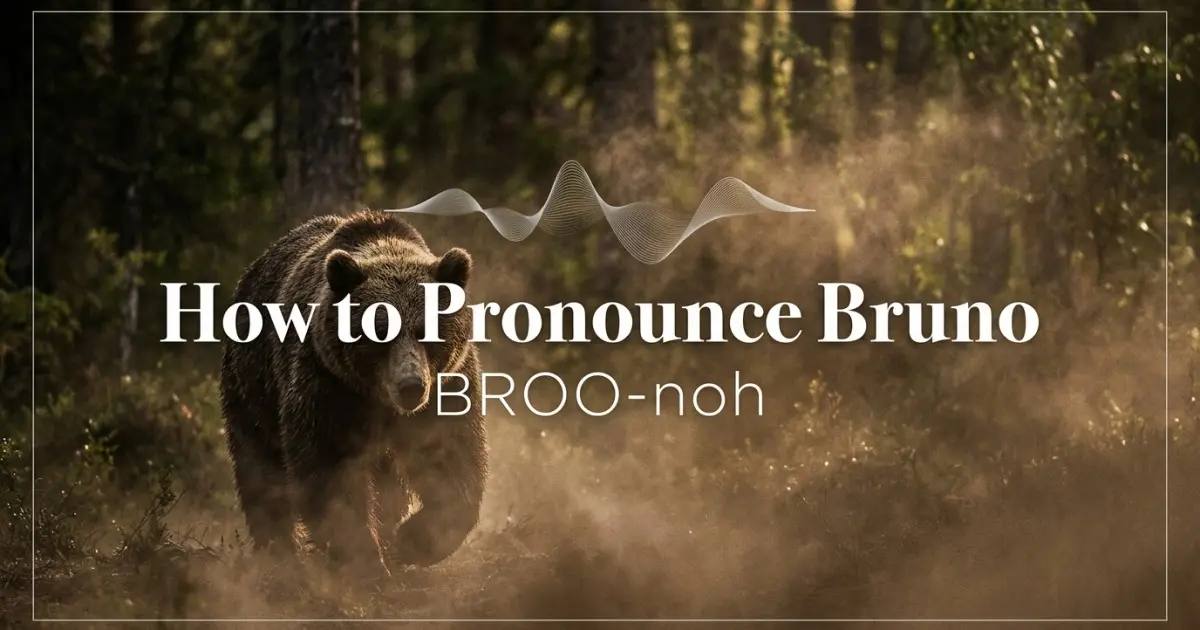
Imagine Bruno being called across a playground, announced at a school event, or read from a roster by someone who has seen the name before but may not have said it aloud recently. The name looks compact, warm, and international, and its pronunciation should be just as clear: BROO-noh. Two syllables, stress on the first, with a rounded opening vowel and an open final oh. The name should not sound like BRUH-noh, BROON-oh, or broo-NOH.
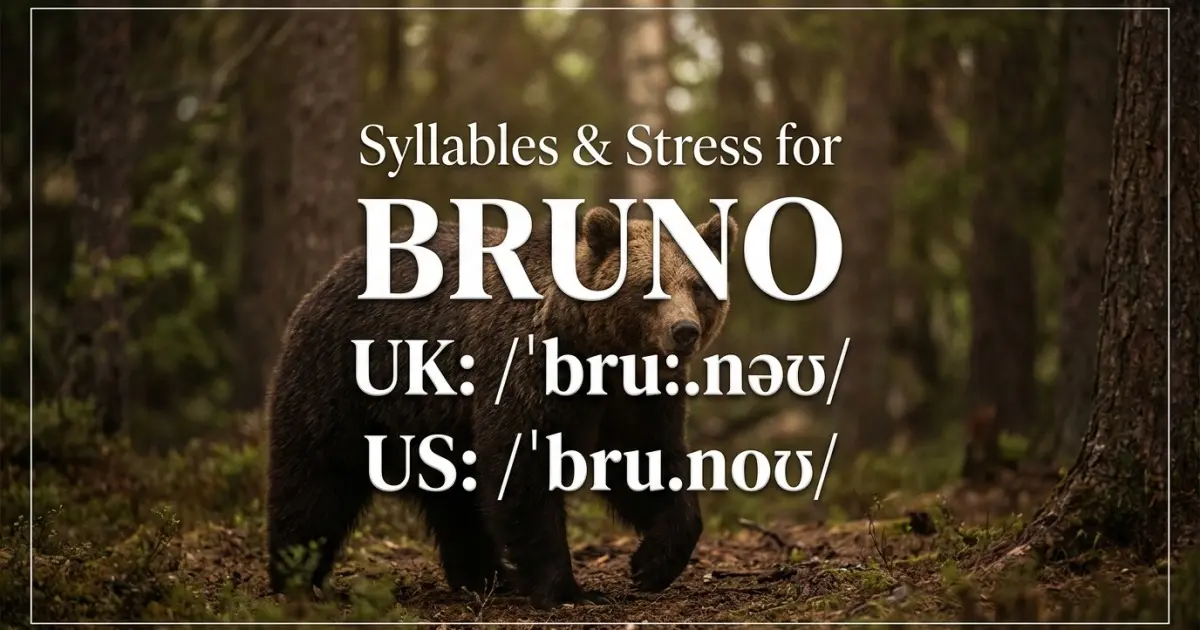
That rounded sound matters because Bruno means “brown,” a meaning tied to earth, bark, wood, leather, clay, and warm natural materials. The pronunciation gives that earthy meaning a sturdy spoken frame. In U.S. English, the IPA is /ˈbruːnoʊ/; in U.K. English, it is /ˈbruːnəʊ/. The final vowel may be shaped slightly differently across accents, but the central guide stays the same: say BROO-noh, with the first syllable carrying the name’s weight.
How Bruno Is Actually Said When BROO Carries the Name
| Element | Phonetic Detail | Quick Tip |
|---|---|---|
| Standard pronunciation | BROO-noh | Say it in two syllables, with the strongest beat on BROO. |
| Syllable count | 2 syllables | Break it as BROO + noh. |
| Stress pattern | Main stress on the first syllable | The opening should be stronger than the ending: BROO-noh. |
| U.S. IPA | /ˈbruːnoʊ/ | The long oo sound is central, and the final vowel stays rounded. |
| U.K. IPA | /ˈbruːnəʊ/ | The ending may glide slightly differently, but the two-syllable rhythm remains steady. |
| Opening sound | BR | Begin with a firm b flowing into r, without adding a vowel between them. |
| Vowel sound | Long OO | Use the vowel in blue, true, and moon. |
| Ending sound | noh | Finish with an open oh-like sound, not a clipped or silent ending. |
Bruno Depends on the Rounded BROO Sound
The first syllable is the heart of Bruno’s pronunciation. It should sound like BROO, rhyming with blue, true, and crew. This long oo vowel gives the name its warmth and depth. If the first syllable becomes bruh, the name loses much of its rounded character. Pronunciation lands more fully when the name’s roots and history are already in view, so begin with Bruno meaning.
Because the stress falls on the first syllable, BROO should be clear and confident. It does not need to be exaggerated, but it should carry the name. The second syllable follows more lightly. This stress pattern gives Bruno its sturdy, friendly rhythm: strong first beat, open final release.
The BR opening should be firm but smooth
Bruno begins with the consonant blend br. The b gives the name a solid start, while the r adds movement. In accessible linguistic terms, r behaves like a liquid consonant, which means it helps the sound flow rather than stop abruptly. Say BR as one smooth unit, not buh-roo. Once the sound pattern is clear, some shortenings stop feeling optional and start feeling natural, and the clearest map is in nicknames for Bruno.
The OO vowel should stay long
The vowel in Bruno should be long and rounded. It is not the short vowel in but or brush. The clearest guide is BROO, as in brew. This vowel gives the name its warm, full-bodied sound.
The Final NOH Keeps Bruno Open and Approachable
The final syllable of Bruno should be heard clearly: noh. It should not disappear, and it should not take the main stress. The name is not BROON, and it is not broo-NOH. It is BROO-noh, with the ending acting as a soft landing after the stronger first syllable.
This ending is part of Bruno’s charm. The final o keeps the name warm, open, and international in feel. Without it, the name would sound clipped. With too much emphasis, it can sound theatrical. The best pronunciation lets the final syllable complete the name naturally.
The N should connect cleanly
The n in the second syllable should connect directly after the first syllable: BROO-noh. Avoid stretching the name into a gap such as BROO-uh-noh. Bruno works best when the two syllables move smoothly together.
The final O should not become silent
Bruno ends with an audible vowel. It should not be reduced so far that the name becomes Broon. The open ending gives Bruno its softness after the strong opening.
American and British Bruno Share the Same Basic Rhythm
Bruno is stable across major English accents. The U.S. IPA is /ˈbruːnoʊ/, and the U.K. IPA is /ˈbruːnəʊ/. The notation differs mainly in the final vowel, but both forms keep the same practical pronunciation map: two syllables, first-syllable stress, long oo, and an open ending.
In American English, the final vowel often sounds like a rounded oh. In British English, the ending may glide slightly differently, but the name remains clearly BROO-noh in structure. Parents do not need separate everyday pronunciations for U.S. and U.K. contexts; the accent color may shift, but the name’s rhythm stays intact.
American English pattern
In American English, Bruno sounds like BROO-noh, with a full long oo in the first syllable and a rounded final oh.
British English pattern
In British English, Bruno still begins with BROO and keeps first-syllable stress. The final vowel may sound a little more gliding, but the name remains two syllables.
The Most Common Bruno Mistakes Come From Flattening the Vowels
Bruno is easy once heard, but a few pronunciation mistakes can happen when speakers shorten the vowels or move the stress. The safest correction is always BROO-noh.
Do not say BRUH-noh
This mistake shortens the first vowel and removes the name’s rounded warmth. The first syllable should be BROO, not bruh.
Do not say broo-NOH
The final syllable should be heard, but it should not carry the main stress. Bruno is first-stressed: BROO-noh.
Do not compress it into BROON
Bruno has two syllables. The final o is part of the name and should not disappear into the n.
Do not insert an extra vowel after B
The opening blend should be smooth. Say BR together, not buh-ROO-noh. The name begins directly with BROO.
Practice Lines Help Bruno Keep Its Rounded Strength
The best way to practice Bruno is to give the first syllable weight and let the final syllable finish warmly. The name should sound grounded, clear, and friendly.
Slow practice
Bruno.
BROO-noh.
Two syllables: BROO + noh.
Everyday practice
Good morning, Bruno.
This is Bruno.
Please welcome Bruno to the class.
Full-name practice
Bruno James.
Bruno Reid.
Bruno Gabriel Cole.
Bruno Alexander Reed.
When testing Bruno with middle names and surnames, listen for the transition after the final oh. Consonant-starting middles such as James, Thomas, Reid, Gabriel, Samuel, and Felix often create a clean next step. Vowel-starting middles can work too, but the full name should preserve Bruno’s rounded first syllable and open final sound.
Bruno Pronunciation FAQ
How do you pronounce Bruno?
Bruno is pronounced BROO-noh. It has two syllables, with the main stress on the first syllable.
What is the IPA pronunciation of Bruno?
The U.S. IPA pronunciation is /ˈbruːnoʊ/, and the U.K. IPA pronunciation is /ˈbruːnəʊ/. Both keep the stress on the first syllable.
Is Bruno pronounced BROO-noh or BRUH-noh?
The correct guide is BROO-noh, with a long oo sound in the first syllable. It should not sound like BRUH-noh.
What pronunciation mistakes happen with Bruno?
The most common mistakes are shortening the first vowel, stressing the final syllable, dropping the final o, or adding an extra vowel before the r. The simplest guide is BROO-noh.