
How to Pronounce Broderick: How to Say It Clearly and Naturally
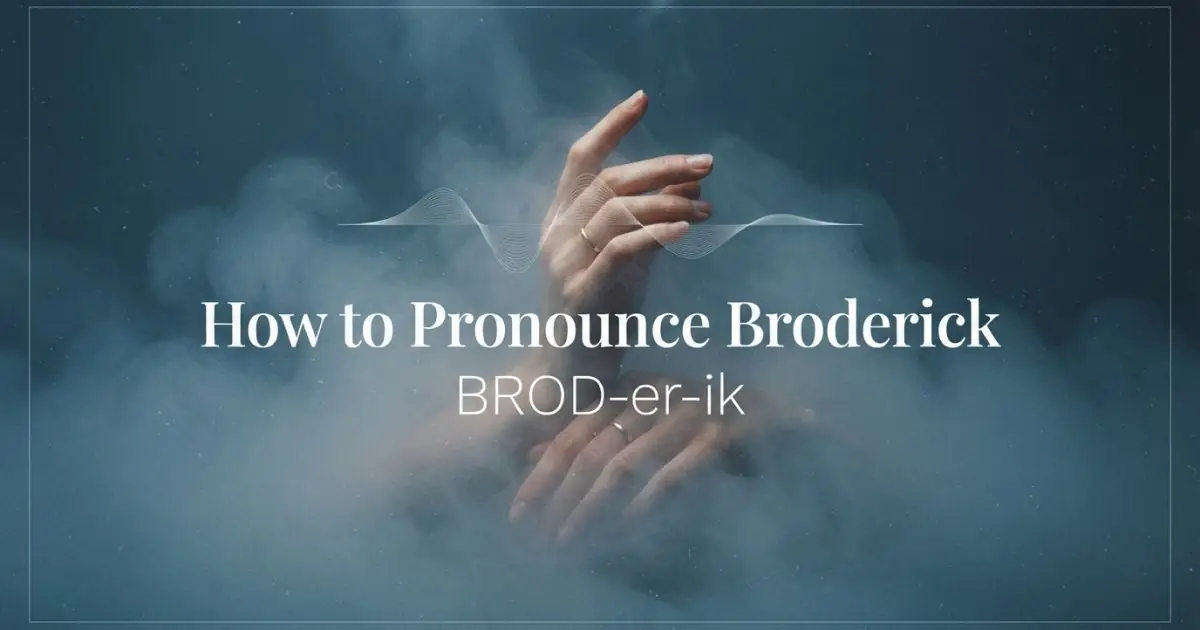
The first time Broderick appears on a class list, a ceremony program, or a new employee badge, the name gives the reader several clues at once. It looks substantial, surname-like, and old enough to carry history. But it is not difficult once the rhythm is understood. The name is pronounced BROD-er-ik: three syllables, with the weight placed firmly at the beginning.
That first syllable does most of the work. Say BROD clearly, then let the rest of the name move more lightly: er-ik. Broderick is not “bro-DEER-ick,” not “BROAD-rick,” and not a two-beat compression. Its strength comes from a steady three-part cadence. The name begins with a firm consonant blend, softens in the middle, and closes neatly with -ik.
How Broderick Is Actually Said: Strong First Syllable, Lighter Finish
Broderick is pronounced BROD-er-ik. The name has three syllables, and the stress falls on the first syllable. That stress pattern matters because it gives Broderick its sturdy, surname-style sound. The final two syllables should follow naturally rather than compete for emphasis.
| Element | Phonetic Detail | Quick Tip |
|---|---|---|
| Full pronunciation | BROD-er-ik | Put the emphasis on BROD, then say the final two syllables lightly. |
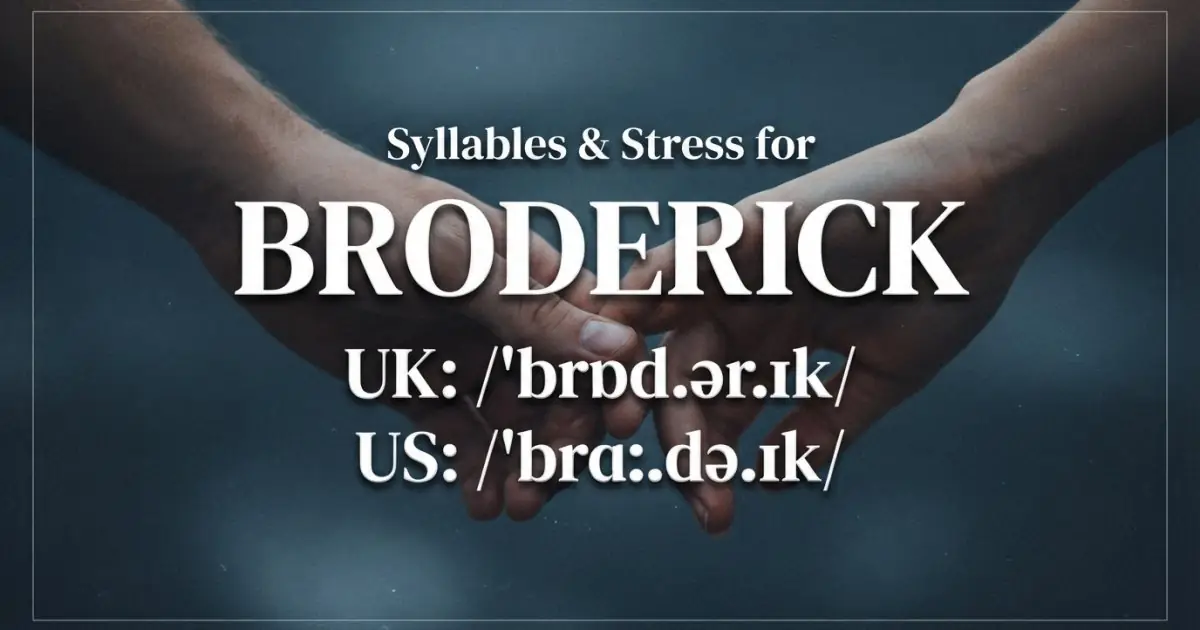
| U.S. IPA | /ˈbrɒdərɪk/ | The stress mark before the first syllable shows that BROD is the strongest beat. |
| U.K. IPA | /ˈbrɒdərɪk/ | The listed U.S. and U.K. forms match, so the core pronunciation stays stable. |
| Syllable count | 3 syllables | Say it as BROD-er-ik, not as a two-syllable shortcut. |
| Opening sound | /br/ consonant blend | Start with a clean B sound flowing into R. |
| Ending sound | /ɪk/ as in “brick” | Keep the final syllable short and crisp. |
The Sound Anatomy of Broderick
Broderick has a strong, balanced sound because it combines a firm opening with a lighter middle and ending. The name does not rush. It has enough length to feel formal, but its sounds are familiar enough for everyday use. The sound matters more once you know what the name is meant to carry, which is why the wider frame starts in Broderick meaning.
The opening blend gives Broderick its backbone
Broderick begins with the consonant blend /br/. A blend means both consonants are heard, but they move together smoothly. The b gives the name a firm start, while the r adds movement. That opening is part of why Broderick feels strong before the full name is even finished.
The first syllable is BROD, not brode or brood. In the listed pronunciation, the vowel is short and grounded. It should feel close to the first syllable of brother in some accents, but with a clear d closing the beat: BROD.
The middle syllable keeps the name from sounding heavy
The second syllable, er, is unstressed. In everyday speech, it should be light and quick. This middle syllable acts like a hinge between the strong opening and the crisp ending. If it is overemphasized, the name can start to sound stiff.
A natural pronunciation lets the middle relax: BROD-er-ik. The r sound gives continuity, while the unstressed vowel keeps the name moving.
The ending closes Broderick cleanly
The final syllable is ik, like the ending of Eric or brick. It should not become a drawn-out eek sound. It should also not disappear entirely. The ending gives Broderick its final snap, so it needs to be present but not heavy.
When all three parts are balanced, the name has a strong but approachable rhythm: BROD-er-ik.
Broderick Across American, British, and Everyday Accents
The listed U.S. and U.K. IPA forms are the same: /ˈbrɒdərɪk/. That means the basic pronunciation does not change much across major English varieties. Accent differences may shape the vowel slightly, but the stress pattern remains the same.
American pronunciation: clear, front-loaded, and steady
In American English, Broderick is usually said with strong first-syllable stress: BROD-er-ik. The middle syllable may sound like a quick der or dur depending on the speaker’s accent, but it should not become the main beat.
American speakers should take care not to reduce the name too much into “BROD-rick.” That shortened version may happen casually, but the full careful pronunciation keeps three syllables.
British pronunciation: same rhythm with local vowel color
In British English, Broderick keeps the same three-syllable structure and first-syllable stress. The vowel in the first syllable may sound slightly different depending on regional accent, but the pronunciation still follows the same pattern: BROD-er-ik.
The key is the rhythm rather than an exact imitation of one accent. As long as the first syllable is stressed and the name has three beats, the pronunciation remains clear.
Everyday speech and natural shortening
In fast speech, longer names often compress slightly. Broderick may sometimes sound close to “BROD-rik” in casual conversation. That does not mean the formal pronunciation changes. It simply reflects the way people simplify names when speaking quickly.
For introductions, ceremonies, school records, or professional settings, BROD-er-ik is the clearest form. It gives the name its full shape and prevents confusion with shorter sound neighbors.
Common Pronunciation Mistakes With Broderick
Most pronunciation mistakes with Broderick come from moving the stress, stretching the vowel, or reducing the name to two syllables. These mistakes are easy to correct because the intended pronunciation is straightforward once broken into parts.
Mistake 1: saying bro-DEER-ick
Some readers may see the middle of the name and overemphasize it, creating bro-DEER-ick. That is not the intended pronunciation. The stress belongs at the front: BROD-er-ik.
A helpful correction is: “The first syllable is strongest: BROD-er-ik.” This keeps the focus on rhythm rather than spelling debate.
Mistake 2: turning Broderick into BROAD-rick
Another possible mistake is flattening the name into two syllables, as if it were BROAD-rick. While casual speech may sometimes compress the middle, the careful pronunciation has three syllables. The middle er should be heard, even if lightly.
Try clapping it in three beats: BROD — er — ik. That physical rhythm makes the structure easy to remember.
Mistake 3: making the final syllable too long
The ending should be ik, not eek. Broderick does not end like “unique.” It ends with a short, crisp syllable close to the final sound in Eric. Keeping the ending short preserves the name’s clean cadence.
Sound Neighbors That Help Explain Broderick
Broderick is distinctive, but it has several sound neighbors that can help people understand its rhythm. These comparisons should be used as guides, not replacements, because Broderick has its own full three-syllable shape. Once the sound pattern is clear, some shortenings stop feeling optional and start feeling natural, and the clearest map is in nicknames for Broderick.
Names with a similar ending
The ending of Broderick is close to the ending of names like Roderick, Frederick, and Derrick. These names share a crisp -ick finish, which helps listeners understand that the final syllable should be short.
Roderick is especially useful as a rhythm neighbor because it has the same three-syllable pattern. If someone can say ROD-er-ik, they can usually understand BROD-er-ik quickly.
Words that clarify the first and last sounds
For the first syllable, think BROD: a short, firm beat with a clear d. For the final syllable, think brick without the br. These simple sound anchors help prevent the two most common issues: stretching the first vowel or lengthening the ending.
Broderick should sound substantial, but not slow. The name moves best when the first syllable leads and the final two syllables follow lightly.
Practice Lines for Saying Broderick Naturally
Practice lines help place Broderick in real speech. The name may look long at first, but once the rhythm is set, it becomes easy to say smoothly.
Everyday practice
- “This is Broderick.”
- “Broderick is pronounced BROD-er-ik.”
- “Broderick will be joining the class today.”
- “We saved a seat for Broderick.”
- “Broderick, come over here for a minute.”
Full-name practice
- “Broderick James has a compact, classic rhythm.”
- “Broderick Alexander gives the name a longer formal line.”
- “Broderick Elias softens the transition after the first name.”
- “Broderick Samuel keeps the full name grounded.”
Correction practice
- “The stress is on the first syllable: BROD-er-ik.”
- “It has three syllables.”
- “The ending is short, like -ik.”
- “Think BROD, then er, then ik.”
Why Broderick’s Pronunciation Supports the Name’s Strength
Broderick means “famous power; son of Roderick,” and its pronunciation suits that substantial meaning. The name begins with force, but it does not stay heavy. The first syllable provides strength, the middle adds movement, and the ending closes with precision.
That balance helps Broderick age well. It can sound sturdy on a child, formal on a document, and confident in professional life. It has enough length to feel complete, but the pronunciation is not complicated. Once the three-beat rhythm is known, BROD-er-ik is clear and memorable.
For families considering Broderick, the pronunciation is part of the name’s appeal. It feels established, masculine, and grounded without being difficult to use. Say it with the weight at the beginning and the rest in motion: BROD-er-ik.