
Brittany Name Meaning: What Gives the Name Its Lasting Appeal
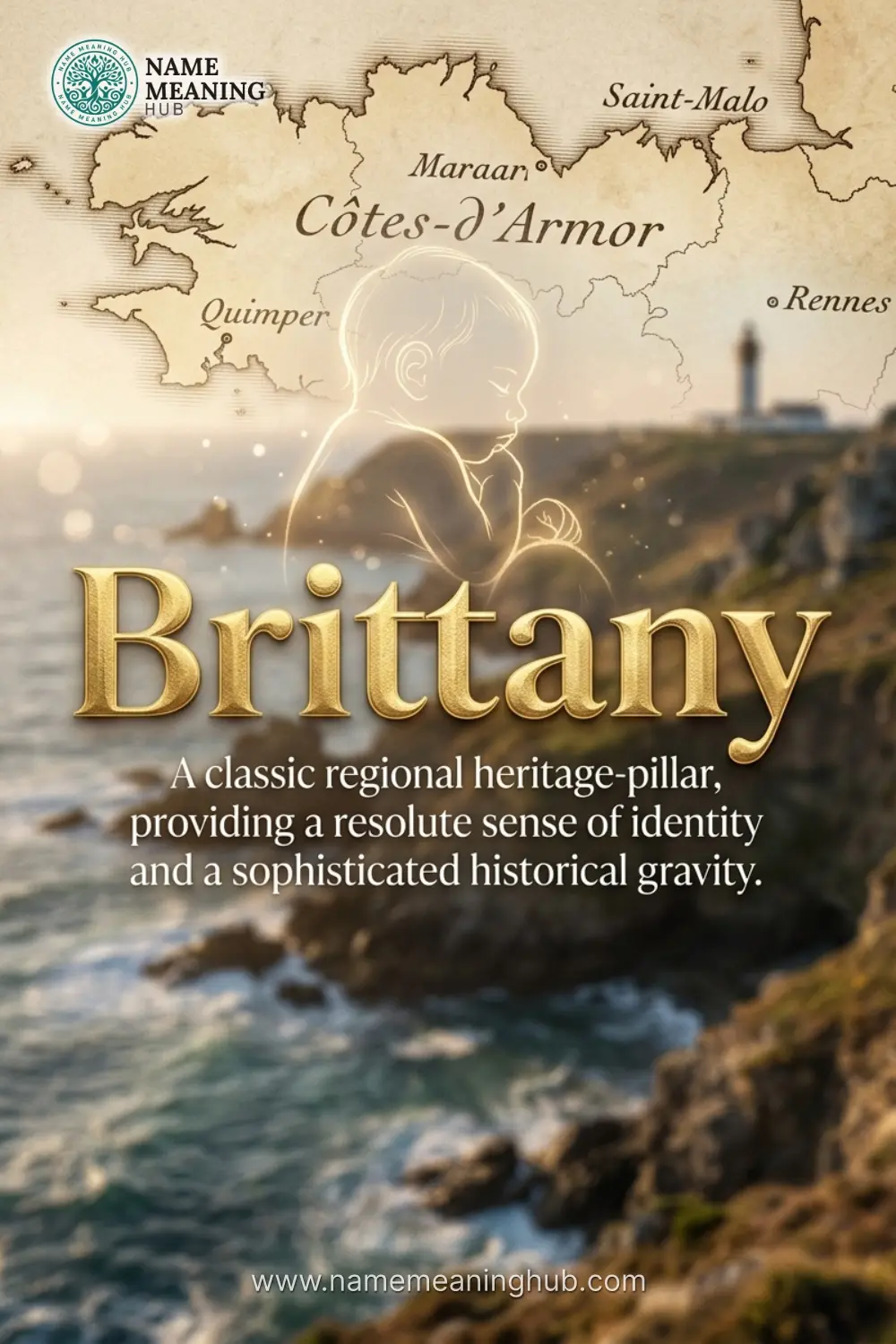
Brittany is a name that begins with a map. Before it became a familiar given name in classrooms, yearbooks, and signatures, it pointed outward to a place: a region of north-west France, carrying with it the older idea of being “from Britain.” That layered geography is what gives the name its unusual texture. Brittany does not come to the nursery as a flower, a jewel, or a virtue. It arrives as a place-name turned personal, a region transformed into identity. That shift matters. Names drawn from places often carry a different emotional weight from names drawn from saints or abstractions. They suggest belonging, landscape, migration, and cultural memory. In Brittany, the first thing you hear is not a moral command or a poetic image, but a location that became intimate enough to wear.
And yet Brittany never feels remote. That is part of its social success. Some geographic names remain too grand or too obviously touristic to settle naturally into everyday life. Brittany did the opposite. It moved from map to person with surprising ease. The sound helped: brisk, bright, and unmistakably modern in English. But the deeper reason may be that Brittany offered a way of sounding polished without sounding fragile. It had a regional origin, a soft European aura, and a familiar American social life all at once. That combination made it feel both worldly and ordinary, which is one of the hardest balances for a name to achieve. Brittany is geography that learned how to become a personality.
Brittany's U.S. popularity rank over time, 1963–2024
Popularity statistics are based on official data from the Social Security Administration baby name records.
Brittany: A Place-Name Pillar with Historical Range
Brittany presents a chart pattern of a broader past with a clearer present, reflecting a massive naming cycle that reached its height in the late 1980s. While it now behaves more like a “legacy classic,” it remains widely recognized and sits comfortably with other heritage place-names .
The trace visibility in other lanes has faded, leaving a firm feminine clarity. Referring to the region of Britain, its three-syllable rhythm provides a sense of cultural familiarity and strength.
Brittany in one clean frame
| Key Facts | Information | Quick Insight |
|---|---|---|
| Name | Brittany | The form is instantly recognizable, which gives the name strong everyday usability even outside its original geographic reference. |
| Primary Gender Usage | Female | The sound profile reads distinctly feminine in modern American use, though its place-name structure gives it more backbone than many ornamental girls’ names. |
| Primary Origin | French | The French origin lends the name a continental polish while still keeping it familiar to English speakers. |
| Primary Meaning | From Britain | This is a meaning of movement and affiliation rather than pure description, which gives the name unusual depth beneath its familiar surface. |
| Pronunciation | BRIT-uh-nee | The firm first syllable gives the name clarity and energy, preventing it from sounding overly delicate. |
| IPA (US) | /ˈbrɪtəni/ | The vowel and stress pattern make the name highly readable in everyday English. |
| IPA (UK) | /ˈbrɪtəni/ | US and UK pronunciation align closely here, which adds to the name’s portability. |
| Syllable Count | 3 | Three syllables give Brittany movement and shape, but the quick stress keeps it from becoming formal or heavy. |
| U.S. girls’ rank (2024) | No. 791 | Official data places Brittany in a range where it is still familiar, but no longer crowded by overuse. |
Brittany begins as geography before it becomes identity
One of the most interesting things about Brittany is that its meaning is directional rather than symbolic. “From Britain” does not describe a flower, a temperament, or a virtue. It describes origin. It tells you where something or someone came from. That gives Brittany a very different imaginative life from names built around radiance, grace, purity, or triumph. The name is relational. It belongs to the long history of naming people through land, movement, and place.
That is also why Brittany feels more substantial than many names that rose to popularity in the late twentieth century. Its modern social life may be recent, but its inner logic is older. It comes from a place-name tradition, and place-names tend to carry hidden architecture. They connect the individual to a wider world. Research across naming traditions shows that place-based names often suggest identity through affiliation: a person is named not by what she is supposed to become, but by where she is linked. Brittany exemplifies that structure beautifully.
Historically, naming guides have placed Brittany alongside other map-based feminine names, which helps explain its tonal category. It belongs to the same larger naming instinct that turns regions, countries, and cities into personal names. But Brittany stands apart because it is neither overly exotic nor overly plain. It retains a trace of continental elegance while still sounding entirely at home in English-speaking life. It is a location-name that lost the tourist quality and kept the polish.
There is also something deeply modern about that transformation. In a more mobile, media-rich culture, place-names became emotionally available in new ways. Parents were not only drawing from family trees and saints’ calendars. They were also drawing from maps, travel, regions, and names that sounded culturally suggestive without being difficult. Brittany offered exactly that balance. It let geography become soft enough for a daughter’s name, but not so soft that the name lost definition.

How Brittany turned a French region into an American first name
Brittany’s modern life as a girls’ name depends on a fascinating double identity. On one hand, it is tied to the French region. On the other, naming books have long noted how especially at home it became in America. That split between European origin and American adoption is central to its character. Brittany sounds as though it carries a passport, yet it also sounds like someone you might have known all your life. If you are building a shortlist around names like Brittany, browse classic and modern girl names.
This may be one reason the name worked so powerfully in the United States. American naming culture has often been especially receptive to place-names that combine accessibility with a slight aura of elsewhere. Brittany fit that preference almost perfectly. It was recognizably feminine, easy to pronounce, and suggestive of a real place, yet it never felt difficult or exclusive. It sounded worldly in a way that did not require explanation.
The project materials also preserve a useful historical anchor: Brittany appears among the most popular girls’ names of the 1990 era. That matters because it confirms what many ears already sense. Brittany was not merely a niche or specialist choice. It was fully absorbed into mainstream naming life. Once a place-name reaches that level of use, it changes category. It stops feeling like a bold geographical gesture and starts functioning as a generational first name. Brittany made that transition decisively.
Yet the name has not lost all trace of its geographic origin. That lingering connection is part of its appeal now. Because Brittany is no longer at the height of saturation, the older map-based meaning can become audible again. Parents considering it today do not inherit only the memory of its peak use. They also recover the more interesting foundation beneath it: a region name, a cultural marker, a feminine form with travel and history folded quietly inside it. To compare Brittany with other names from this origin, browse French-origin names.
Brittany sounds modern because the stress lands fast and clean
Phonetically, Brittany has always had a practical advantage. The standard pronunciation, BRIT-uh-nee, begins with a compact and decisive first syllable. That opening does a lot of social work. It makes the name clear across a room, easy to hear on first introduction, and strong enough not to dissolve into sweetness. Many feminine names depend on airy vowels for charm. Brittany begins instead with a clipped consonant cluster and a short vowel, which gives it more edge and energy.
The second and third syllables then soften the line. After the firmness of Brit, the name moves into lighter territory. This creates one of Brittany’s most useful effects: it sounds polished without sounding fragile. The t anchors it, the ending releases it. That structure helps explain why Brittany often reads as friendly, active, and socially competent. It is feminine, but never wispy.
Why the sound gave Brittany staying power
Three-syllable names can sometimes become cumbersome, especially if they are heavily ornate or stress the middle in a wavering way. Brittany avoids that problem because the stress is immediate and unambiguous. The listener knows the name quickly. There is no hesitation about where to land. That sort of phonetic clarity is one reason names remain usable long after their period of peak fashion has passed.
The consonants also matter. The initial blend gives the name a crisp start; the later liquid and nasal sounds prevent it from feeling too abrupt. Brittany is therefore both structured and sociable in sound. This is not trivial. Sound often shapes social impression before meaning has time to register. Brittany sounds organized, approachable, and brisk, which aligns well with the way the name has functioned publicly.
Brittany beside its close sound-neighbors
Brittany also lives near a small family of related forms, especially Britney. That closeness can sharpen the perception of Brittany itself. Compared with the shorter variant, Brittany often feels fuller, more region-based, and slightly more formal. The extra syllable keeps the geographic connection more visible. That is useful if parents are drawn not only to the sound but to the place-name character of the original form.
In that sense, Brittany occupies an interesting threshold. It is familiar enough to seem entirely established, yet structured enough to preserve a trace of its larger cultural source. That makes it more than a phonetic fashion item. It remains legible as a name with roots.
Brittany’s social style: familiar, polished, and more grounded than it seems
At first glance, Brittany can be mistaken for a purely generational name, one tied too tightly to a specific wave of popularity. But that reading misses the way the name is built. Beneath the social familiarity is a place-name logic, a French regional reference, and a sound pattern that is cleaner and more durable than many names from the same broad era. That gives Brittany more structural integrity than people sometimes credit it with.
In style terms, Brittany sits in a compelling middle zone. It is more tailored than highly romantic French names, less austere than some surname-style names, and more geographically grounded than abstract modern creations. It can sound polished, but it does not sound remote. It can sound feminine, but it does not rely on delicacy. These balances help the name remain usable in adulthood.
That adult usability matters. Some names that peak strongly in one generation are hard to imagine outside youth culture. Brittany does not fully suffer from that. Its meaning, sound, and structure all help it re-enter mature life. A grown Brittany does not sound improbable. The name is clear, professional, and established enough to handle age. If anything, its current relative quiet may allow its best qualities to surface again: not trendiness, but clarity.
It is also worth noting that Brittany belongs to a group of names that helped normalize the use of regional and place-based girl names in mainstream life. That legacy gives it a certain cultural importance. It is not just one more familiar girls’ name. It is part of the moment when maps became emotionally available as naming material. That makes the name more historically interesting than its everyday familiarity might suggest.
What Brittany’s 2024 standing reveals about the name now
Official Social Security Administration (SSA) data places Brittany at No. 791 for girls in 2024. That position tells a nuanced story. The name is still fully recognizable, but it is no longer operating under the pressure of ubiquity. For many modern parents, that is an advantage. Brittany can now be heard with more space around it. Instead of blending instantly into a crowd, it has room to feel individual again.
Names in this range often experience a subtle recovery of dignity. When a name has already passed through a period of heavy popularity, its later life can be surprisingly attractive. The public knows it, yet no longer expects to hear it constantly. That is exactly the condition in which a name’s deeper qualities often become visible again. In Brittany’s case, those qualities include its map-based depth, its clean pronunciation, and its French-regional origin.
This also means Brittany is now positioned differently from how many people remember it. It no longer functions as a default mainstream pick. It functions as a familiar-but-selective choice. That can give it new emotional power. The name keeps its readability while shedding some of the crowding that once surrounded it. For parents who want a name people know but do not hear in every room, that can be a persuasive combination.
Importantly, this newer position does not erase the name’s earlier popularity. It refines it. Brittany remains culturally legible, but it now feels more chosen than inherited. That shift can make an old familiar name newly alive.
Where Brittany opens next
A strong first name does not only carry meaning on its own. It also creates pressure points for everything that follows it. Brittany is especially good at this because its sound is so settled while its identity is so layered.
Brittany and middle names work best when the second name changes the temperature
Because Brittany already has rhythm, polish, and a strong first syllable, it usually benefits from a middle name that either simplifies the flow or deepens the mood. The best pairings do not repeat Brittany’s brightness. They ground it, refine it, or bring family history into the line. If you want the full pairing logic behind that contrast, see Brittany middle names.
Nicknames for Brittany reveal whether the name is being softened or streamlined
Brittany offers natural nickname possibilities, but those possibilities tend to move in two directions: warmer and more intimate, or shorter and more socially brisk. That makes the nickname landscape especially useful in understanding how families and peers will shape the name in daily life. To see how those different moods shorten in real life, explore Brittany nicknames.
Brittany’s pronunciation is one of the reasons the name stayed socially easy
Its stress pattern is clear, the consonants are familiar, and the full form remains easy to say. That combination matters more than people often realize. Brittany works because it sounds readable from the first introduction. If you want the full sound pattern behind that rhythm, read Brittany pronunciation guide.
Why Brittany still feels like more than a timestamp
The most interesting names are often the ones that appear fully familiar and then reveal more structure underneath. Brittany is one of those names. It can be dismissed too quickly as a period piece if one hears only its social history. But if one listens more carefully, the name contains a region, a story of affiliation, a French frame, and a deeply practical English-language sound pattern. It has more internal scaffolding than a casual glance suggests.
And perhaps that is Brittany’s enduring gift. It lets a person carry geography without heaviness. It lets a French regional name move through American life without fuss. It lets a word that once pointed outward toward a place become inward enough to feel personal. The name’s meaning is “from Britain,” but what it really offers is a poised sense of belonging: not abstract virtue, not fantasy, but rootedness translated into everyday speech.
That is why Brittany still holds. It is not only a memory of a naming era. It is a name built from movement, region, and recognition, shaped into something completely livable. A map became a first name, and the result was not distance but intimacy. In that sense, Brittany is a small triumph of naming: proof that even a place can become a person without losing its horizon.
The Origin and Meaning of Brittany: FAQ
What does Brittany mean?
Brittany means “from Britain.” In modern naming use, it is also understood through its connection to the French region called Brittany.

Is Brittany a place-name?
Yes. Brittany belongs to the tradition of names drawn from regions and places. That geographic origin is one of the reasons the name feels more grounded than many purely decorative girls’ names.
Does Brittany still work as a baby name now?
Official data suggests it still does. Brittany remains widely recognized but is no longer heavily crowded, which can make it feel familiar and distinctive at the same time.
How is Brittany different from Britney?
Brittany is the fuller form and keeps the regional connection more visible. Britney is a shorter respelling that feels more streamlined, while Brittany tends to preserve more of the original place-name character.
Does Brittany age well into adulthood?
Yes. Its clear pronunciation, strong first syllable, and established history help it remain credible in adult, professional, and formal settings.