
Brandon Name Meaning: Roots, Mood, and Timeless Appeal

Brandon is a name that stands on a rise, but not on a pedestal. That distinction matters. Its meaning, “broom-covered hill,” does not belong to the language of courts, crowns, or abstract virtue. It belongs to the physical world: a hill, open to weather, and broom, the hardy yellow-flowering shrub that grows where the land is rougher than a formal garden would prefer. Brandon therefore begins with a landscape, not a slogan. It imagines height, but not grandeur for its own sake. It suggests a place with wind on it, scrub on it, and a clear line of sight.
That is what makes Brandon more interesting than its familiarity sometimes allows. The name has lived so comfortably in modern English-speaking life that people can forget it is carrying an older, more tactile image. But the image is still there. Brandon is not merely a strong boys’ name with a broad sound. It is a name of elevated ground that remains rooted in ordinary terrain. It carries both outlook and earthiness. In a culture that often splits names into either polished refinement or blunt toughness, Brandon quietly offers a third thing: cultivated familiarity built on rugged ground.
Brandon's U.S. popularity rank over time, 1914–2024
Popularity statistics are based on official data from the Social Security Administration baby name records.
Brandon: A Friendly and Reliable Era Pillar
Brandon presents a chart pattern of a broader past with a clearer present, reflecting a massive naming cycle that reached its height at #6 in 1992. While its adoption is more selective today, it continues to behave as a reliable choice parents trust for its professional feel and soft sound.
The lack of a secondary track reinforces its firm, traditional masculine identity. Meaning “broom-covered hill,” its simple two-syllable rhythm carries a sense of permanent resonance that has stood the test of time.
What Brandon reveals when you look past familiarity
| Key Facts | Information | Quick Insight |
|---|---|---|
| Name | Brandon | The form feels broad, recognizable, and socially settled, which helps it remain usable across generations. |
| Meaning | broom-covered hill | This is a landscape meaning with both elevation and rough texture, giving the name strength without theatricality. |
| Origin | English | The English place-name tradition makes Brandon feel rooted and inherited rather than newly manufactured. |
| Primary gender usage | male | Current public use keeps Brandon clearly readable as a boys’ name with a stable, familiar identity. |
| Pronunciation | BRAN-dun | The strong opening and relaxed ending make the name feel grounded but approachable in everyday speech. |
| Syllable count | 2 | Two syllables give Brandon a sturdy, balanced shape that sounds complete without feeling formal. |
| Latest U.S. year | 2024 | The current data shows Brandon remains an active living choice, not merely a remembered one. |
| U.S. boys’ rank (2024) | No. 230 | Official data places Brandon in a familiar but not overrun tier, where it still feels recognizable without feeling exhausted. |

Brandon is a hill name, but not a lofty one
There is a temptation to hear any hill name as automatically noble. Height often carries symbolic prestige. Hills see farther. Hills rise. Hills suggest vantage, perspective, and placement above surrounding ground. Brandon does include that upward element, but it complicates it immediately. This is not a marble hill or a crown-topped hill. It is a hill covered with broom, a hardy growth associated with rougher, more open land. That detail changes the emotional register of the whole name. Brandon does not picture elevation separated from the real world. It pictures elevation still tangled with weather, shrub, and ground cover.
That is one reason Brandon can feel so socially convincing. It is strong without sounding aristocratic. Many boys’ names either advertise power too bluntly or lean on polish so heavily that they become remote. Brandon avoids both. Its landscape meaning suggests outlook, but also use. A broom-covered hill is not a fantasy peak. It is part of lived terrain. The name therefore carries a kind of practical dignity rather than a showy one.
This practical dignity makes Brandon emotionally flexible. It can suit someone confident and outgoing, but it can also suit someone quieter, more observant, or more self-contained. The hill implies perspective. The broom implies resilience. Put together, the name feels like a place that has endured weather. That is a surprisingly rich atmosphere for such a familiar modern first name.
There is also a subtle moral appeal in this combination. A name tied to real terrain often feels more trustworthy than one tied only to praise. Brandon does not promise brilliance, kingship, or conquest. It offers steadiness, visibility, and rootedness. It begins not with an achievement, but with a landscape. That can make it feel refreshingly unpretentious.

Brandon carries English place-memory into modern life
Why place-based names keep their weight
English place-derived names often last because they begin in something concrete. A field, hill, ford, brook, or settlement gives a name more than just a sound. It gives it memory. Even when modern users are not consciously imagining the original terrain, they still inherit some of the stability that comes from a name rooted in land rather than invention. Brandon belongs to that tradition. It feels as though it comes from somewhere. That is part of why it continues to sound solid even after long public use.
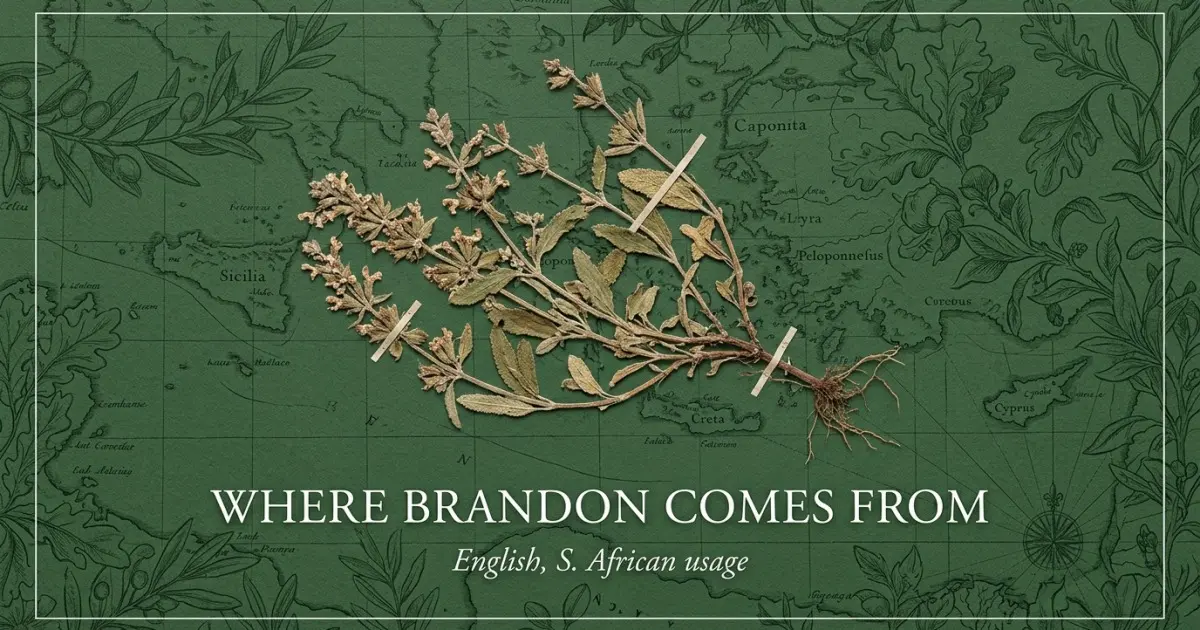
Names that emerge from place rather than pure abstraction often age especially well. They do not depend on changing ideals of style or virtue. A hill remains a hill. Ground cover remains ground cover. The natural image may be humble, but it is durable. Brandon benefits from that durability. It sounds like a name with an origin outside fashion, and people often trust such names more.
What broom adds to Brandon’s identity
The broom in Brandon matters more than it first appears to. Without it, the name might simply suggest elevation. With it, the name acquires texture. Broom is not delicate greenhouse growth. It is hardy, visible, and at home in rougher terrain. That gives Brandon a quality many polished names lack: it feels exposed to the elements. It feels like a place that has to endure rather than merely look beautiful.
That atmospheric detail helps explain why Brandon often feels strong in a grounded way rather than a theatrical one. The name has natural grit inside it. It does not sound harsh, but its meaning keeps it from becoming weightless.
Why English roots make Brandon feel inherited rather than invented
Another reason Brandon holds together so well is that its English origin gives the name a sense of continuity. It does not feel like a clever modern construction assembled for effect. It feels older than its present popularity cycles. Even people who know nothing about place-name etymology often sense that Brandon is not trying too hard to sound impressive. It sounds established. That established quality helps the name remain socially versatile. To view more names linked to this cultural tradition, explore more English names.
It can move through schools, offices, sports teams, family life, and adulthood because it does not feel bound to one narrow mood. It has roots, and roots usually make names more forgiving.
Why Brandon sounds broad, steady, and familiar
Phonetically, Brandon does a lot of its work in the first syllable. Bran is broad, compact, and strongly stressed. It gives the name immediate substance. Then the second syllable relaxes into a lighter dun, which softens the overall line. This is one reason Brandon feels both sturdy and approachable. A harder ending might have made it sound more abrupt. A more ornate ending might have made it sound more formal. Instead, Brandon lands in a middle space that feels usable and human.
The consonant cluster at the front also matters. The br opening is familiar and easy in English, but it still carries force. It starts the name with momentum. Then the short vowel and nasal blend give the first syllable weight without heaviness. All of that contributes to the impression that Brandon is a dependable name rather than a flashy one. It has breadth, not glitter.
That breadth pairs beautifully with the meaning. A broom-covered hill should not sound clipped or brittle. It should sound like it occupies space. Brandon does. The name has enough room in it to suggest terrain, but enough reduction in the second syllable to remain conversational.
This is one reason Brandon has survived changing tastes. Names that are too tied to one narrow phonetic fashion often date quickly. Brandon has something broader and more serviceable in its sound. It is familiar without being flimsy, substantial without being pompous. That kind of sound design tends to age well because it can serve many different personalities and life stages.
Brandon in current U.S. life
Official 2024 U.S. data places Brandon at No. 230 for boys. That ranking says a great deal about the name’s present social position. Brandon is still well known. Most people will recognize it instantly, say it comfortably, and understand its public tone without needing guidance. Yet it is not in the most crowded or exhausted part of the current chart. That means it retains familiarity without losing all individuality.
This can be one of the healthiest places for a name to live. It spares families from the risks of obscurity while also avoiding the flattening effect of extreme popularity. Brandon feels established, but not overrun. For parents, that can be especially appealing. The name sounds solid and familiar, but it does not feel unavoidable.
The ranking also suggests something important about the name’s endurance. Brandon is not merely surviving on memory. It is still being actively chosen. That matters because a great many once-prominent names become admired but not lived. Brandon has not disappeared into that category. It remains fully functional in the present, which says something about its underlying strength. Familiarity alone does not keep a name alive. Usability does. Brandon clearly still has it.
Brandon among today’s dependable boys’ names
Brandon belongs to a group of boys’ names that feel broad-shouldered, friendly, and publicly legible. But what distinguishes it from many similarly familiar choices is that its strength comes from ground rather than abstraction. Some names in its social neighborhood are strong mainly because of sound. Brandon also has a topographic image behind it, and that image gives the name more depth than a casual hearing may reveal. If you are weighing names with a similar gender profile, visit more names for boys.
Another advantage is that Brandon does not feel emotionally closed. It sounds masculine without sounding harsh. The relaxed second syllable softens the line just enough to keep the name from becoming rigid. That makes it adaptable. Brandon can belong to someone athletic, gentle, bookish, charismatic, or quietly observant. The name does not force a single social script.
This flexibility helps explain why it remains so workable. A great many names earn attention by sounding distinctive in isolation but become harder to imagine on a real person. Brandon has the opposite gift. It sounds like someone people can actually know. That practical imagineability is one of the most underappreciated reasons names last.

Where Brandon opens into the rest of the story
Middle names that can frame Brandon more sharply
Because Brandon already has breadth and familiarity, a middle name often does useful balancing work. The strongest pairings either sharpen the rhythm, deepen the grounded mood, or add classic structure behind the easy first name. If you want the full pairing logic behind that contrast, see middle names for Brandon.
Nicknames that bring Brandon closer without shrinking it too much
Brandon is long enough to shorten, but complete enough not to need shortening. That gives it a healthy nickname life in which tone changes more than identity, and that is part of the name’s social flexibility. To see how those different moods shorten in real life, explore Brandon nicknames.
Pronunciation that keeps Brandon so naturally usable
BRAN-dun is one of the name’s quiet advantages. The strong opening and softened ending make Brandon feel steady, conversational, and easy to trust in everyday speech. If you want the full sound pattern behind that rhythm, read Brandon pronunciation guide.
Why Brandon still feels like Brandon
In the end, Brandon works because it joins outlook to earth. It is a hill name, but not a lofty one. It is a landscape name, but not a delicate one. It carries elevation without separating itself from scrub, weather, and ground. That combination gives the name a social and emotional honesty that many more polished names cannot quite manage. Brandon sounds familiar because it is. But it also feels rooted because it is.
That rootedness is what keeps the name alive. It does not need a grand claim to feel substantial. It does not need novelty to feel memorable. It has a hill, a hardy covering, a broad English sound, and a public ease that allows all of those things to move naturally through contemporary life. The child called Brandon inherits not only familiarity, but terrain. He stands somewhere. That matters.
So Brandon endures because it makes steadiness visible. It offers a name with height, but without airs; with earth, but without heaviness; with familiarity, but without emptiness. The old landscape is still underneath it, and that is why Brandon still feels so reliable. It is a name of rough ground shaped into ordinary confidence, and that is a harder kind of beauty than it first appears.