
Blakely Pronunciation: The Most Common Ways to Mispronounce It
The real pronunciation test for Blakely usually happens in a fast public moment, not in a thoughtful conversation about naming style. A teacher reaches the B section of a class roster and has half a second to decide whether the name is familiar enough to trust. A receptionist looks down at a waiting-room clipboard and prepares to call it across a crowded room. A coach scans a team sheet and says the name before anyone has time to correct the rhythm. Blakely tends to do well in those moments because, once heard once, it follows a clear and memorable pattern. But it can still trigger a brief hesitation on first sight because the spelling sits close to other modern surname-style names and invites people to wonder whether the first syllable should sound like Blake or black.
That small moment of uncertainty matters. It is where the name either feels polished or starts to sound overthought. The standard pronunciation is BLAYK-lee: two syllables, strong stress at the front, and a light, quick ending. The first syllable does almost all the structural work. The second syllable softens the line and lets the name land with ease. That is why Blakely sounds more graceful in speech than some people expect from a surname-shaped modern name. Once the opening is right, the rest follows almost automatically.
What Blakely’s spoken pattern is actually clarifying
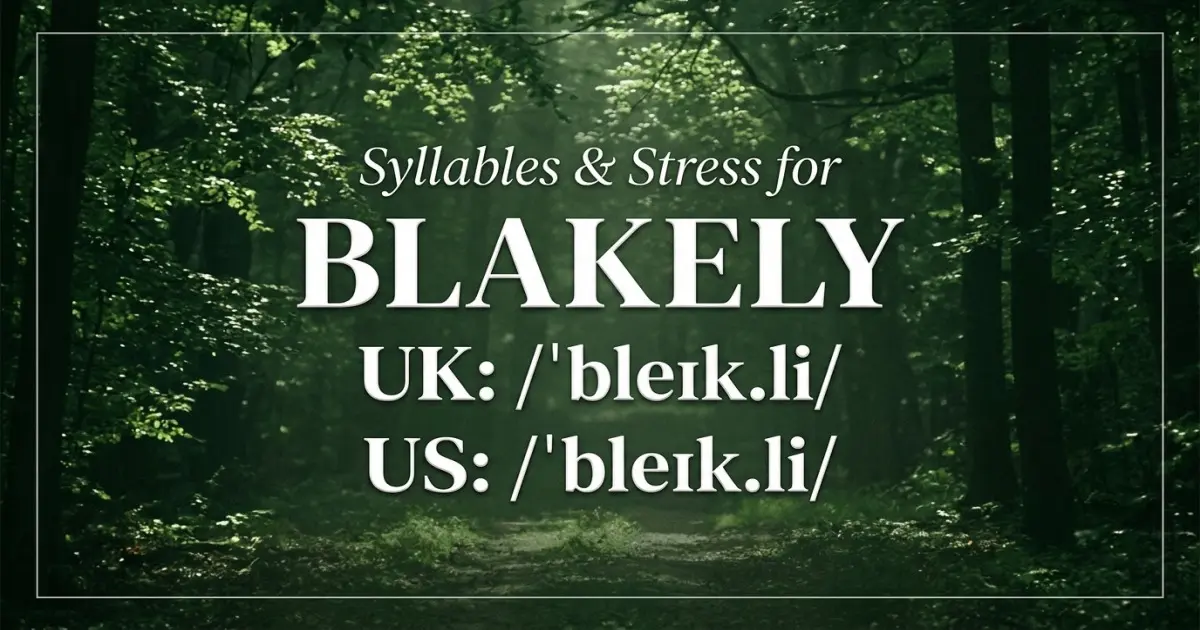
Before looking at common slips or accent notes, it helps to lay out the sound pattern plainly. Blakely becomes much easier once the stress, vowel shape, and ending are heard together rather than guessed from the spelling alone.
| Element | Phonetic Detail | Quick Tip |
|---|---|---|
| Everyday pronunciation | BLAYK-lee | Say it in two beats, with the first syllable clearly stronger than the second. |
| IPA (US) | /ˈbleɪkli/ | The opening vowel is the long ay sound heard in “blaze” or “day.” |
| IPA (UK) | /ˈbleɪkli/ | The core pronunciation remains the same in UK English, which makes the name unusually stable across accents. |
| Syllable count | 2 syllables | Hear it as BLAYK / lee, not as three beats and not as one rushed block. |
| Stress pattern | Primary stress on the first syllable | The name should open confidently. If the second syllable pulls too much attention, the rhythm weakens. |
| Ending sound | Light -lee ending | Finish gently. The ending should soften the name, not compete with the opening. |
Blakely sounds right when the first syllable carries the name
Why the opening of Blakely must sound like “Blake”
The most important pronunciation fact about Blakely is that the first syllable is Blake, not black. That opening uses the long ay vowel, and it is where the full stress belongs. This matters because the name’s entire personality depends on that first beat. When the opening is correct, Blakely sounds polished, brisk, and clear. When it is not, the name loses its shape almost immediately. Pronunciation lands more fully when the name’s roots and history are already in view, so begin with Blakely meaning.
English speakers are especially sensitive to first-syllable stress in short names. A name like Blakely needs the first beat to lead with confidence. That is what gives the name its bright social energy. The second syllable then exists to finish the line, not to balance it equally. If the opening is uncertain, the whole name starts sounding as though the speaker is negotiating with the spelling instead of trusting the sound.
Why the “-lee” in Blakely should stay light
The second syllable is familiar and easy, but it should remain lighter than the first. -lee is not supposed to overtake the name. It is there to soften the strong front edge and make the whole line more graceful. That is one reason Blakely feels so current in speech. The name begins with a clear, almost surname-like firmness and then releases into something lighter and more approachable.
Linguistically, the liquid consonant l helps the ending flow rather than stop sharply. Liquids often make names feel smoother because the tongue transitions through them instead of hitting a hard wall. In Blakely, that liquid quality prevents the name from sounding too stiff or abrupt. The effect is small, but it matters. It turns a potentially sharp modern name into something more fluent.
How the two syllables create Blakely’s social ease
Blakely works partly because it is short enough to stay stable under pressure. Two-syllable names often survive quick speech better than longer names because the listener can catch the whole rhythm at once. In Blakely, the pattern is very clear: one strong syllable, one lighter syllable. That creates a fast, confident shape that most speakers can remember after a single hearing.
This also explains why the name performs well in modern life. It sounds bright without being flimsy and tailored without being difficult. The pronunciation is doing much of that work. It gives the name clarity and speed.
Where Blakely gets misheard, and why those slips happen so easily
Blakely is often pulled toward “black-lee” on first glance
The most common mistake is also the most understandable one: some readers see the letters and momentarily head toward BLACK-lee instead of BLAYK-lee. This happens because the spelling visually begins with the same letters as “black,” and quick readers often rely on pattern recognition before they hear the name in context.
That does not mean the name is unstable. It only means the eye may reach for the most familiar visual cluster before the ear has a chance to correct it. Once the intended pronunciation is heard, most people do not make the same mistake again. The right sound is more natural in the full name than the wrong one.
Sound-neighbor confusion can also happen with Blake and Blakeley
Blakely also lives near a cluster of similar names: Blake, Blakeley, and even some surname-style names ending in -ley or -ly. These neighbors can create small hesitations in fast reading. A speaker may briefly wonder whether the name ends in -lee, -lay, or even a softer schwa-like ending. In standard usage here, it is clearly -lee.
That distinction matters because the final syllable helps define the name’s style. BLAYK-lee sounds polished and feminine in current American use. A different ending would pull the name into another tonal category entirely.
Why over-pronouncing Blakely can sound less natural than mispronouncing it
Another subtle mistake is over-careful pronunciation. Because Blakely looks modern and surname-based, some speakers slow down too much and give equal weight to both syllables. That makes the name sound more deliberate than it needs to be. In ordinary speech, the rhythm should feel brisk and front-led. The more the speaker trusts the strong opening and lighter ending, the better the name sounds.
This is important because naturalness matters just as much as correctness. A technically careful but rhythmically stiff pronunciation can sound less convincing than a relaxed one that trusts the name’s built-in shape.
Blakely across accents stays more stable than many modern names
US and UK speakers mostly agree on Blakely
One of Blakely’s practical strengths is that the supplied US and UK IPA forms match: /ˈbleɪkli/. That kind of consistency matters. Some contemporary names look straightforward until they travel across accents and begin to split into competing norms. Blakely largely avoids that problem. The long ay vowel remains intact, the stress stays at the front, and the final -lee remains clear.
This means Blakely has a kind of spoken portability that many style-driven names do not. It sounds like itself in different English-speaking settings without needing much adjustment. That is a valuable trait for any name with modern popularity.
What may vary slightly, and what stays fixed
Accent may change the texture of the vowels by a small amount. One speaker may make the opening slightly broader, another slightly tighter. Some speakers may clip the final -lee a little more lightly than others. But those are minor color shifts. What stays fixed is far more important: two syllables, first-syllable stress, long ay vowel, and a light final -lee.
That stability helps explain why the name is so easy to integrate into everyday public life. It may look fashionable, but it is not fragile in the mouth.
How to make Blakely sound natural in real speech
Break Blakely into two beats, then say it like a real name
The easiest way to practice Blakely is rhythmically. Say it first as two clear beats: BLAYK / lee. Then say it again at normal conversational speed. The first beat should feel stronger and clearer. The second should feel lighter and more relaxed. If the name begins sounding choppy, reconnect the two syllables more smoothly. If the beginning starts drifting toward black, bring the long ay vowel back into focus.
A useful contrast exercise is this:
- Blakely, not BLACK-lee
- BLAYK-lee, not blake-LEE
- strong front, soft finish
Practice lines that sound like daily life
Names are easiest to learn inside ordinary speech rather than in isolation. Try saying Blakely in phrases such as:
- Blakely, your table is ready.
- This certificate is for Blakely Brooks.
- Can Blakely come to the office, please?
- I’m looking for Blakely Parker.
These kinds of examples matter because they place the name where it actually has to work: in classrooms, ceremonies, appointments, and everyday introductions. Blakely does well there because once the first syllable is right, the whole name becomes effortless to carry.
Why Blakely sounds polished because the rhythm never has to strain
Blakely is a good example of a name whose elegance comes from balance rather than complexity. It does not need unusual consonants, silent letters, or unpredictable stress to sound stylish. Its effect comes from one strong syllable and one lighter syllable working together cleanly. That is why the name sounds modern without sounding unstable.
In the end, the best way to pronounce Blakely is also the most natural one: open clearly on BLAYK, finish lightly on -lee, and let the whole name move as one smooth two-beat unit. BLAYK-lee is not only the standard pronunciation. It is the version that best preserves what makes Blakely work so well aloud: brightness, clarity, and easy contemporary poise.