
How to Pronounce Bjorn: The Easy Way to Say It Right
Picture a coach reading a roster before the first practice of the season. Most names move quickly, but one spelling makes the voice slow down: Bjorn. The Bj opening looks unfamiliar in English, so the reader may try “Buh-jorn,” “Bee-jorn,” or even flatten it into “Born.” Then the family gives the clean correction: BYORN.
Bjorn is pronounced BYORN, with one syllable. The name has Scandinavian origin and means “bear,” which gives it a strong, grounded image, but the pronunciation is not as difficult as the spelling may first suggest. Official data shows Bjorn ranked 767 for boys in the United States in 2024, so it is visible enough to be heard in real life while still distinctive. The key is the opening glide: say a quick by sound, then let the name land in one compact beat.
How Bjorn Is Actually Said: The B and Y Move Together
| Element | Phonetic Detail | Quick Tip |
|---|---|---|
| Full pronunciation | BYORN | Say it as one syllable, not as two separate parts. |
| Syllable count | 1 syllable | The whole name lands in one strong beat. |
| Stress pattern | Single stressed syllable | Because Bjorn has one syllable, the full name carries the stress. |
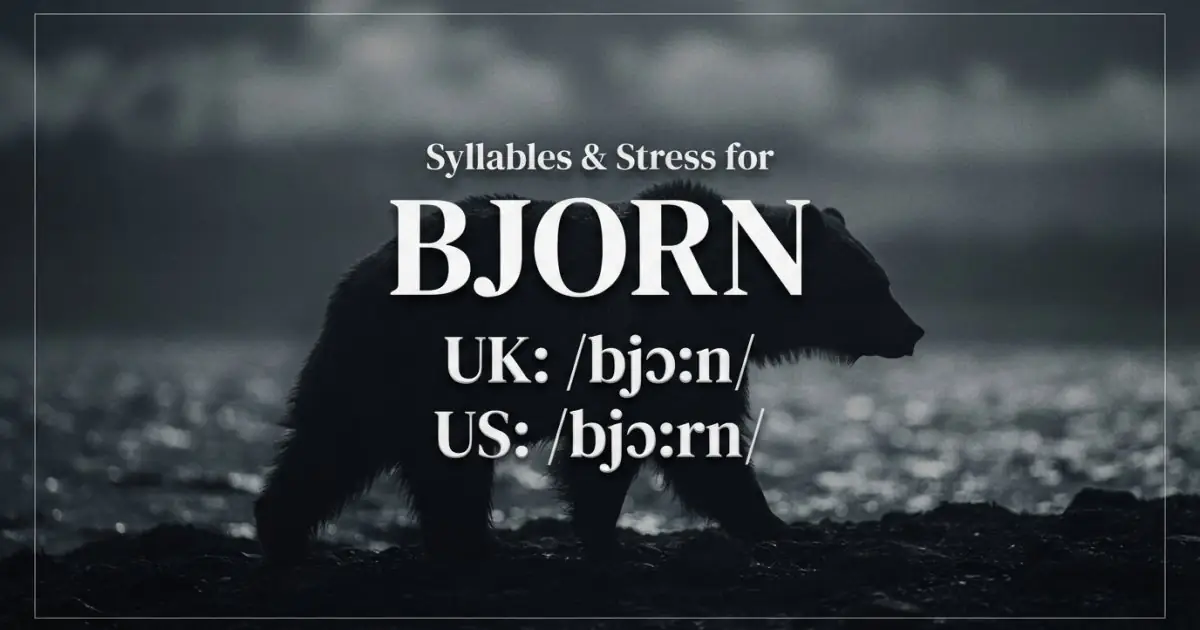
| US IPA | /bjɔːrn/ | American English usually keeps the final r clear. |
| UK IPA | /bjɔːn/ | In many British accents, the final r is softer or not pronounced. |
| Opening sound | b + y glide | Begin like the first sound in beautiful, but tighter and faster. |
| Core vowel | Broad or sound | Keep the center full and rounded, not thin or clipped. |
Bjorn’s One-Syllable Shape Keeps the Name Strong
Bjorn is short, but it is not plain. Its strength comes from the way several sounds are compressed into one syllable: the opening b, the quick y glide, the broad vowel, and the final consonants. The name should not be stretched into BY-orn or separated into Buh-jorn. It is one smooth unit: BYORN. Pronunciation lands more fully when the name’s roots and history are already in view, so begin with Bjorn meaning.
The opening glide is the sound people need most
The most important part of Bjorn is the opening. The Bj spelling does not mean the name starts with two separate syllables. It begins with a b followed immediately by a y-like glide. A glide is a very quick sound that moves into the vowel. In everyday terms, it is the difference between saying plain born and the fuller BYORN.
A useful practice cue is to start with by, then move straight into orn without pausing: by + orn becomes Bjorn. The two parts should merge into one syllable.
The broad middle gives Bjorn its bear-like weight
The central vowel in Bjorn is broad and rounded. It gives the name its weight. If the vowel becomes too thin, the name can lose some of its grounded feeling. The sound should be closer to yorn than to jurn or jern.
This rounded center fits the meaning “bear.” The name feels compact, but not small. It has the kind of sound that lands firmly without needing extra syllables.
The Sounds Inside Bjorn: Glide, Liquid, and Nasal Finish
Phonetically, Bjorn has more movement than its short form suggests. The opening b gives the name a defined start. The y glide carries the voice quickly into the vowel. In American English, the r is a liquid consonant, a smooth sound that shapes the vowel before the name closes with n, a nasal consonant.
The final r changes by accent
In American English, Bjorn usually keeps the final r clearly: BYORN. That r adds firmness and gives the ending a slightly rugged sound. In many British accents, the r may soften, so the name can sound closer to BYAWN while still following the same one-syllable structure.
This does not mean the name has two different identities. The US and UK forms simply reflect normal accent behavior. The important features stay the same: one syllable, b plus y glide, broad vowel, and a grounded finish.
The closing n keeps Bjorn compact
The final n gives Bjorn a clean close. It prevents the name from trailing off and helps it feel complete. In speech, the ending should not become overly heavy, but it should still land. Bjorn is not airy; it is concise and firm.
Common Bjorn Pronunciation Mistakes and Easy Corrections
Most mistakes with Bjorn come from reading the spelling too literally or from trying to fit it into more familiar English patterns. The name looks unfamiliar at first, but the correction is usually simple once the opening sound is understood.
Mistake one: saying Bee-jorn
Bee-jorn adds an extra syllable and separates the opening letters too much. Bjorn should not begin with the word bee. The opening is faster and tighter: BYORN.
A simple correction is: “It’s one syllable — BYORN.” That tells the listener both the sound and the rhythm.
Mistake two: saying Buh-jorn
Buh-jorn is another common attempt because English speakers may insert a vowel between the b and the following sound. But Bjorn does not need that extra vowel. The b and y sound should move together.
To fix it, practice by first, then add the rest: by, byorn, Bjorn.
Mistake three: flattening Bjorn into Born
Some speakers may remove the y glide and say Born. That is close, but not quite right. Bjorn should have a slight y-movement after the b. The difference is small but important because it preserves the name’s Scandinavian shape.
Bjorn Across Accents and Helpful Sound Neighbors
Bjorn is generally stable once the opening is learned. The main accent difference is the final r. American speakers are likely to pronounce it clearly, while many British speakers may soften it. Either way, the name remains one syllable. The way the name resolves at the end often decides which short forms feel natural in speech, and that becomes clearer in Bjorn nicknames.
Sound neighbors make Bjorn easier to remember
A helpful comparison is yorn with a b in front: b-yorn. Another useful cue is “like born, but with a quick y after the b.” This helps people avoid both Bee-jorn and plain Born.
For introductions, a short guide works best: “Bjorn, pronounced BYORN.” If someone hesitates over the spelling, add: “It’s one syllable.”
Saying Bjorn Naturally in Everyday Lines
Practice is easiest when Bjorn appears in ordinary sentences. These lines help the one-syllable rhythm settle into speech:
- Bjorn is here.
- This is Bjorn.
- We named him Bjorn.
- Bjorn, come over here.
- Bjorn has one syllable.
- Bjorn is pronounced BYORN.
For the clearest practice pattern, say by, then move into orn without stopping: by, byorn, Bjorn. Keep the sound in one beat, preserve the quick glide after the b, and avoid adding an extra vowel.