Nicknames for Bennett: Easy Nickname Ideas That Really Work
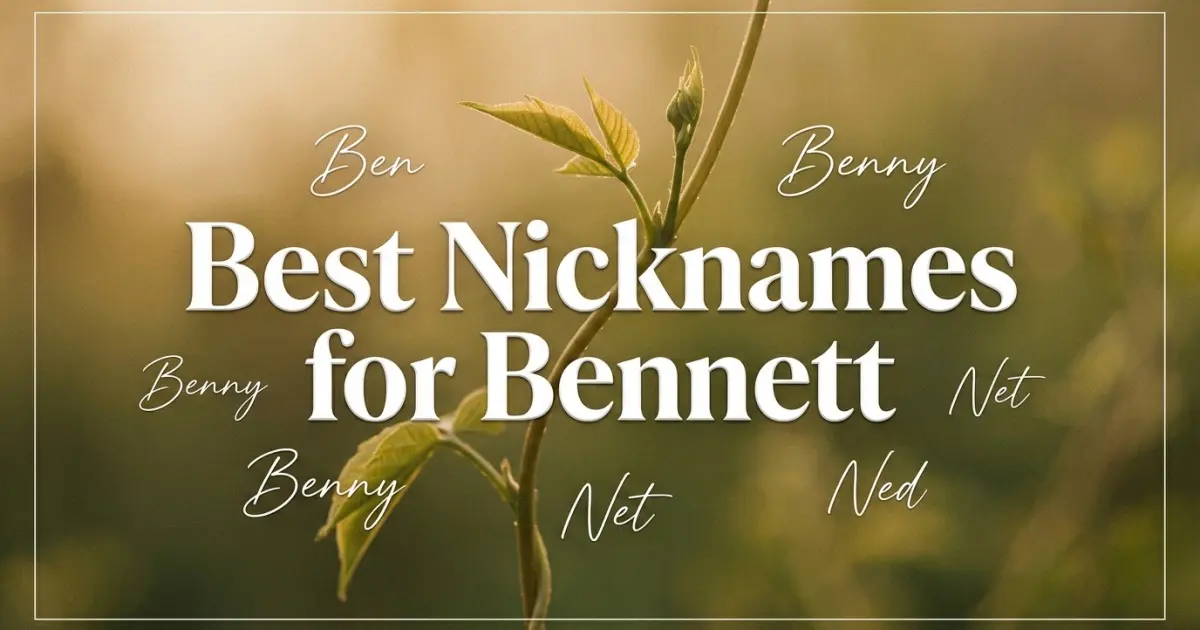
A nickname is not just a shorter sound. It is a social decision. It tells people whether they are being invited closer, whether the speaker is handling the name with affection or efficiency, and whether the person wearing the name is moving through the world formally, playfully, or somewhere in between. Some names contain a dozen obvious nickname doors. Others keep that world smaller and more selective. Bennett belongs to the second group. That is part of its appeal. The name is already compact, polished, and nearly nickname-sized in its full form, which means any shortening feels more intentional and more revealing.
That makes Bennett especially interesting in family life. A long ceremonial name almost expects trimming. Bennett does not. It can remain Bennett from birth to adulthood without sounding cumbersome. So when a nickname does appear, it usually signals something specific: intimacy, childhood softness, family humor, or peer-group ease. In other words, Bennett’s nickname ecosystem is narrower than that of a name like Benjamin, but it is also more socially precise. The few forms that do emerge tend to be real, durable, and emotionally legible. That is why a nickname page for Bennett is less about generating endless options and more about understanding which few options actually live well. Nicknames add personality at the surface, but the deeper weight of the name still sits in Bennett meaning.
What Bennett reveals once people start shortening it
The nickname landscape of Bennett is compact but useful. Most real-life forms come from the front of the name, not the end, and the difference between them is more about tone than about total transformation.
| Group | Suggested Nicknames | Persona | Use Context |
|---|---|---|---|
| Classic everyday | Ben, Benn | Friendly, capable, socially easy | School, sports, work, introductions, everyday public use |
| Cute and affectionate | Benny, Bennie, Ben-Ben | Warm, child-centered, tender | Babyhood, home life, grandparents, siblings, early childhood |
| Short modern | B, Bee | Minimal, casual, peer-driven | Texting, social media, teen years, friend groups |
| Playful homegrown | Benny-boy, B-man, Benji | Playful, relaxed, family-made | Inside-the-family affection, informal home use, child nicknames that may not travel outside the house |
| DIY private forms | B + middle initial, B.T., Ben + surname cue | Specific, personal, socially adaptive | Family inventions, sports teams, close-friend circles, middle-name combinations |
Bennett’s first beat is where almost all the real nicknames live
Phonetically, Bennett is a front-loaded name. The stress lands immediately on BEN, and that matters because nicknames tend to grow from the part of a name the ear hears most strongly. With Bennett, the front does almost all the work. That is why the classic nickname is so obvious and why it has lasted so well.
Ben is Bennett’s most public and durable self
Ben is the clearest everyday reduction of Bennett. It is short, socially effortless, and already deeply established in English-speaking life. Ben works in classrooms, office email signatures, sports rosters, family introductions, and adult professional settings without explanation. That is its main strength. It feels natural everywhere.
For many families, this is the default public nickname even if they love the full name Bennett. The reason is not lack of imagination. It is that Ben solves everyday speech with almost no friction. Because Bennett already begins with such a clean, familiar beat, Ben feels less like a transformation than a practical adjustment in social distance.
Benny softens Bennett without changing its center
If Ben is the public classic, Benny is the affectionate domestic form. It takes the same stressed opening and adds warmth. That extra syllable changes the social temperature immediately. Bennett becomes tailored and composed; Benny becomes cuddly, young, and family-facing. This is why Benny so often belongs to babyhood, grandparents, and siblings rather than the most formal parts of adult life.
Bennie functions similarly, with the spelling shift giving it a slightly more old-fashioned or homespun look on the page. In speech, Benny and Bennie are usually doing the same job: signaling affection rather than efficiency.
Bennett’s stressed center and ending explain why the nickname pool stays narrow
Unlike longer names with several internal nickname zones, Bennett does not naturally split in many directions. That is not a weakness. It is a clue to the name’s character. Bennett is already compact and well shaped, so it resists being cut into multiple equally convincing forms. Most of its nickname energy comes from the same place: the stressed opening. The ending is less fertile territory. Nicknames often grow from the stressed part of a name rather than from spelling alone, so the next useful step is Bennett pronunciation guide.
Why Bennett does not generate many ending-based nicknames
The final -ett in Bennett gives the name its polish, but it does not produce many strong public shortenings in English. In theory, families could experiment with forms drawn from the ending, but in practice these usually feel more private, more improvised, or less natural than Ben and Benny. That is important to say plainly because not every name needs a sprawling nickname menu. Bennett is already near its ideal size.
This is one reason the full form stays so usable. A name with weak nickname pressure often remains itself. Bennett does not beg to be trimmed the way a longer four-syllable classic might. It allows shortening, but it does not require it.
What families do when they want a more playful Bennett
When families want a softer or more playful version of Bennett, they usually do not mine the ending. They build outward from Ben. That is where forms like Ben-Ben, Benny-boy, or Benji can emerge. These are not formal alternatives. They are intimacy language. They often arise through repetition, sibling speech, or the ordinary creativity of daily family life.
Benji is worth a brief note here. It is not Bennett’s most automatic nickname, and many people associate it more strongly with Benjamin. Still, because Bennett shares the same strong Ben opening, some families do arrive there naturally, especially in early childhood. The important thing is to treat such forms as family-made extensions, not as the name’s central public shorthand.
Bennett changes less across ages than many modern names do
One quiet advantage of Bennett is that it does not force dramatic nickname changes as a child grows. Many names move from baby-soft diminutives to school-age shortenings to adult recalibration. Bennett usually holds a steadier line. The core choices stay fairly consistent, and what changes is less the nickname itself than where and by whom it is used.
Babyhood makes Bennett softer, not different
In infancy and early childhood, families often choose the softest available form, which is why Benny becomes so common at home. This makes sense socially. Benny sounds loving and manageable for a small child, and it preserves the clear link to the full name. The child does not have to “outgrow” the formal name later because Bennett has been there from the beginning, ready and waiting in public contexts.
School years usually settle on Ben or full Bennett
Once peer life expands, most children named Bennett naturally sort into one of two public patterns: they remain Bennett or become Ben. Which one wins usually depends on personality and family habit. A child who likes the distinctiveness of Bennett may keep it in full. Another may adopt Ben simply because it is quick and socially efficient. Both outcomes are highly plausible.
That flexibility is one of the name’s great strengths. Bennett can stay complete without sounding heavy, and Ben can function without draining the original name of all character.
Bennett often stays Bennett while private nicknames do the emotional work
Because the full name is already so manageable, many families end up using Bennett publicly and reserving nicknames for the home. That pattern suits the name extremely well. It preserves Bennett’s polish while still allowing private language of affection to grow around it.
DIY Bennett forms work best when they stay human-sized
The most believable homemade nicknames usually grow from real social contexts: a middle initial, a sibling mispronunciation, a team environment, or a quick text shorthand. B, Bee, B.T., or Ben + middle initial all make sense because they sound like things actual friends or relatives might invent. Their strength lies in specificity. They do not need to be universally understood to be socially useful.
This is also where sports and group culture sometimes matter. Boys’ nicknames often drift toward initials or surname-based forms in team settings, and Bennett adapts easily to that style. A Bennett Thomas might become B.T. for a season. A Bennett Walker might hear Ben W. from coaches or classmates. These are less “official nicknames” than practical social compressions, but they are part of the name’s real life.
A caution against overengineering Bennett
The main caution with Bennett is not lack of options but the temptation to force too many. Because the full name is already crisp and wearable, elaborate nickname invention can feel unnecessary. Bennett is strongest when the nickname system remains simple: Ben for ease, Benny for affection, a few private household forms if they arise naturally. That is enough.
In fact, one of the nicest things about Bennett is that it does not require constant editing. The nickname world is there when closeness calls for it, but the full name retains enough ease to stand on its own. That is a very modern advantage. It gives the child a polished public identity and a softer private one without making those two selves feel disconnected.
Short Forms FAQ for Bennett
What is the most common nickname for Bennett?