
Nicknames for Benjamin: Nickname Options from Obvious to Creative
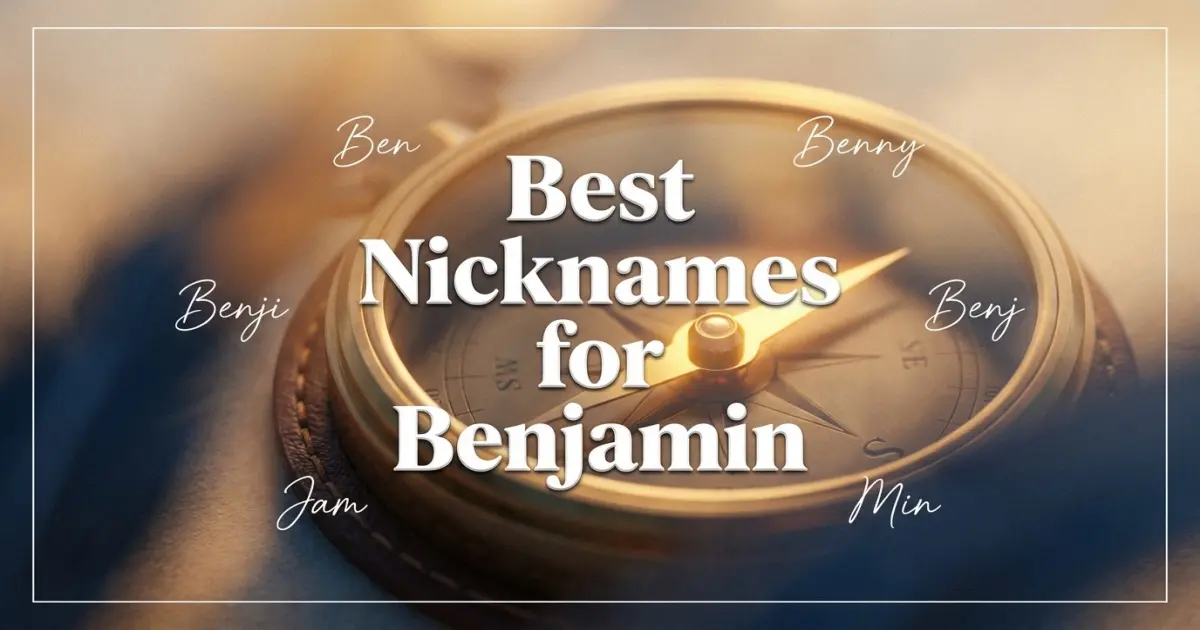
A nickname is rarely just a shorter version of a name. It is a social signal: the version used by parents when affection softens the room, by teammates when speed matters, by friends when familiarity becomes its own language, and by the child himself when he starts deciding how he wants to be known. That is why nickname-rich names endure. They let one formal identity hold several private selves at once. Benjamin is especially good at this. It has a full, recognizable shape in public, but it opens easily into warmer, quicker, more personal forms without losing its character.
That flexibility matters even more because Benjamin is already a highly visible choice. Official data shows it ranked No. 11 for boys in the United States in 2024, which means many families are drawn to it for the same reasons: it feels rooted, familiar, intelligent, and easy to carry through life. Nicknames are part of how families individualize that familiarity. One Benjamin may become Ben almost immediately. Another may live as Benji through childhood. Another may stay Benjamin at school and Benny only at home. The point is not to find the cleverest pet form. It is to understand what each version of Benjamin communicates about intimacy, age, and personality. Nicknames add personality at the surface, but the deeper weight of the name still sits in Benjamin meaning.
What Benjamin becomes once people start using it up close
The nickname landscape of Benjamin is unusually clear. It does not scatter into dozens of equally strong forms. Instead, it produces a few recognizable options, each carrying a different social mood.
| Group | Suggested Nicknames | Persona | Use Context |
|---|---|---|---|
| Classic default | Ben | Steady, capable, widely legible | School, work, sports, introductions, adulthood |
| Warm childhood forms | Benji, Benjy | Bright, affectionate, energetic | Family life, early school years, close friends |
| Soft retro-cute forms | Benny, Bennie | Playful, tender, slightly nostalgic | Home use, grandparents, family-only affection |
| Lean peer shorthand | Benj, B | Casual, quick, teammate-coded | Texts, group chats, locker-room or college use |
| Private family inventions | Ben-Ben, Bee | Highly intimate, household-specific | Toddler years, sibling speech, family-only use |
Benjamin is front-loaded, and that shapes almost every nickname it gets
Some names scatter their nickname energy across the whole word. Benjamin does not. Its strongest social material sits near the front. The first syllable is stressed, memorable, and strong, so most usable nicknames begin there. That is why Benjamin feels generous but not chaotic. It gives families options, yet those options still sound related to one another.
The opening of Benjamin gives you the adult-proof form
Ben is the most stable nickname Benjamin produces. It is short, direct, and socially effortless. It works on a toddler, but it does not belong to childhood. It also works on a resume, in a classroom, in a wedding speech, or over email. That range is what makes it the default shortening for so many Benjamins. It feels like a public version of the name rather than a private diminutive.
Phonetically, Ben succeeds because it keeps the strongest part of Benjamin and discards the rest without sounding abrupt. It carries the stressed opening syllable intact, so the listener hears continuity immediately. No explanation is needed. That matters in real life. The best nicknames are often the ones that do not require social maintenance.
The middle turn of Benjamin is where the livelier forms appear
Benjamin is not technically center-stressed, but its middle consonant turn gives the name bounce, and that is where Benji and Benjy get their charm. These forms still begin with Ben, so they remain familiar, but the added ending makes them lighter, quicker, and more expressive. Benji sounds affectionate without sounding fragile. It has motion in it.
This is why Benji often lands so well in childhood. It feels animated. It suits a child who is lively, sociable, or simply young enough that adults around him want a more textured form than plain Ben. It is also one of the rare cute nicknames that can still survive past early childhood if the bearer likes it. Benji is youthful, but not unserious.
The ending of Benjamin is softer than people realize, and that helps the full name stay usable
Benjamin does not yield many strong nickname options from its ending alone, and that is useful to know. The final -min sound is gentle, but not especially standalone in English. In practice, that means Benjamin’s nickname system is front-heavy. Families go to Ben, Benji, or Benny because those forms feel natural; they do not usually invent durable nicknames from the ending.
But that soft ending still matters. It is one reason the full name Benjamin can stay in active use without feeling stiff. Unlike some formal names that demand shortening in ordinary conversation, Benjamin already ends with warmth. The complete name has enough softness to live comfortably beside its nicknames instead of being replaced by them.
Benjamin changes age better than most nickname-friendly names
One reason parents keep returning to Benjamin is that its nickname system grows up in believable stages. The name can begin in tenderness, pass through casual adolescence, and arrive in adulthood without sounding like three different identities stitched together.
Benjamin in the early years usually leans cute on purpose
For babies and younger children, Benny and Benji are the most emotionally natural options. Benny is softer and rounder. It carries a homey, affectionate energy and often feels especially natural when used by parents and grandparents. Benji is brighter and more kinetic. It tends to sound more playful, more nimble, and a little more contemporary in feel.
These are the years when repetition and warmth matter more than efficiency, so family-only inventions can also appear: Ben-Ben, Bee, or another house nickname that grows out of sibling speech. The important thing is that these are intimate forms, not public ones. They do not need to scale beyond the home to succeed.
Benjamin in adolescence usually gets simpler
As children move into later school years, nickname behavior often becomes more peer-shaped. That is when Ben tends to take over, even for children who were Benny or Benji at home. It is faster, more neutral, and easier to wear in mixed social settings. Teenagers often prefer names that feel less managed by adults, and Ben carries that independence well.
This is also the period when clipped shorthand can emerge in writing and among friends. Benj is one example. It is more common in texts, usernames, and casual group speech than in formal self-introduction, but it is plausible. B can also appear in sports teams or friend groups. These forms are less stable than Ben, but they reflect how real nicknames often work: some belong to a stage, a team, or a circle rather than to the whole life.
Benjamin in adulthood often splits between Ben and Benjamin
By adulthood, many bearers settle into one of two lanes. They are either Ben in most public life, or they remain Benjamin and allow Ben only to friends and family. That split tells you something important about the name: it supports both familiarity and formality without tension. A man can publish as Benjamin, sign emails as Ben, and hear Benny only from his parents without any of those forms feeling false.
Where Benjamin nicknames feel classic, playful, or privately invented
Not every nickname does the same social work. The strongest choices for Benjamin tend to fall into clear categories, and understanding those categories makes it easier to choose a direction that fits the family rather than copying whatever sounds cutest in the abstract.
Classic Benjamin nicknames are the ones that survive introductions
Ben is the obvious example. It sounds complete enough to stand alone. It does not need context, and it does not imply a certain age. Benjamin itself also belongs here, because it is friendly enough to remain usable without shortening. Families who like consistency usually do well with this lane.
Cute Benjamin nicknames work best when they remain relational
Benny, Bennie, Benji, and Benjy all feel more relational than public. They imply closeness. That is not a weakness; it is exactly why many parents love them. A nickname can mark belonging. The key is not to demand that the most intimate form become the universal one if the child later prefers otherwise.
DIY Benjamin nicknames should sound natural when spoken aloud
This is where restraint matters. A good DIY nickname for Benjamin usually comes from ordinary speech habits, not from forcing novelty. Benj works because people already clip names in writing and quick talk. B works in the right peer context because initials naturally arise in teams and friend groups. But more elaborate inventions can feel less like a lived nickname and more like branding. If you would hesitate to call it across a room, it probably belongs in the discard pile. Many short forms only become obvious once the opening sound is clear, which is why Benjamin pronunciation guide belongs naturally here.
The Benjamin nickname mistakes worth noticing before other people make the choice for you
- If you strongly dislike Ben, Benjamin may frustrate you. It is the most natural public shortening, and other people will reach for it.
- Benny is affectionate, but it can read younger or more family-coded than Ben. That is not a problem unless you expect it to function everywhere.
- Benji has personality, but parents should ask whether they love it as a real long-term option or only as a baby-stage sound.
- Do not overdesign a nickname plan. Real nicknames are social. Classmates, siblings, coaches, and the child himself will shape the outcome.
- Remember that the full name Benjamin is already easy to say and socially warm. A nickname is an option here, not a rescue operation.
Why Benjamin does not need an unusual nickname to feel personal
The strength of Benjamin is not that it produces endless variations. It is that the few it produces are clear, believable, and useful at different distances of intimacy. Ben is public and stable. Benji is bright and affectionate. Benny is soft and domestic. Benj and B belong to peer culture more than family ceremony. And Benjamin itself remains entirely wearable, which is a privilege not every long classic name has.
That is what makes the nickname story of Benjamin feel so human. It does not ask parents to invent a persona from scratch. It offers a small set of forms that already understand how relationships change over time. The best choice is usually the one that matches where the voice is coming from: a parent, a friend, a teammate, a teacher, or the child himself when he decides what feels most like him.
Short Forms FAQ for Benjamin
Is Ben the inevitable nickname for Benjamin?
In many public settings, yes. Ben is the most natural shortening because it keeps the stressed opening of Benjamin and sounds complete on its own. Families can prefer Benjamin or Benji, but other people may still default to Ben.
Does Benji age well for a child named Benjamin?
It can. Benji is lively and affectionate, so it often shines in childhood, but it is still plausible for teens or adults who genuinely like it. The key is that it should remain a chosen identity, not a childhood label that feels imposed.
Is Benny too cute to use long term for Benjamin?
Benny usually reads warmer and more private than Ben, so many people keep it for family use even if public life shifts to Ben or Benjamin. It is not unusable long term, but it does carry a more affectionate tone.
Can Benjamin work without any nickname at all?
Yes. Benjamin is one of the stronger formal names in this respect because its full form already sounds familiar and approachable. A nickname can enrich it, but the name does not depend on one.