
How to Pronounce Azalea: Syllables, Stress, and Common Mistakes
The real pronunciation test for a name usually happens in an ordinary room, not in a naming book. It happens when a teacher pauses over the attendance sheet, when a nurse calls for the next family, or when a grandparent hears the name once and tries to say it back with confidence. Azalea is the kind of name that can create a brief pause on the page because it looks lush and elaborate, but once spoken correctly, it tends to make immediate sense. The rhythm is clear, the stressed syllable is memorable, and the ending has enough softness to feel floral without becoming blurry.
That matters because Azalea is a modern flower name with an older Greek root, and names like that can succeed or fail partly on pronunciation ease. If they look beautiful but repeatedly trip people up in real life, the beauty starts to cost something. Azalea avoids most of that problem. The name sounds more natural than its four syllables might suggest. Once the stress lands where it belongs, the whole name opens: uh-ZAY-lee-uh. It feels graceful, but it is not actually hard work for the mouth.
What Azalea is clarifying the moment someone says it correctly
| Element | Phonetic Detail | Quick Tip |
|---|---|---|
| Everyday pronunciation | uh-ZAY-lee-uh | Keep the first syllable light and let the name rise clearly into ZAY. |
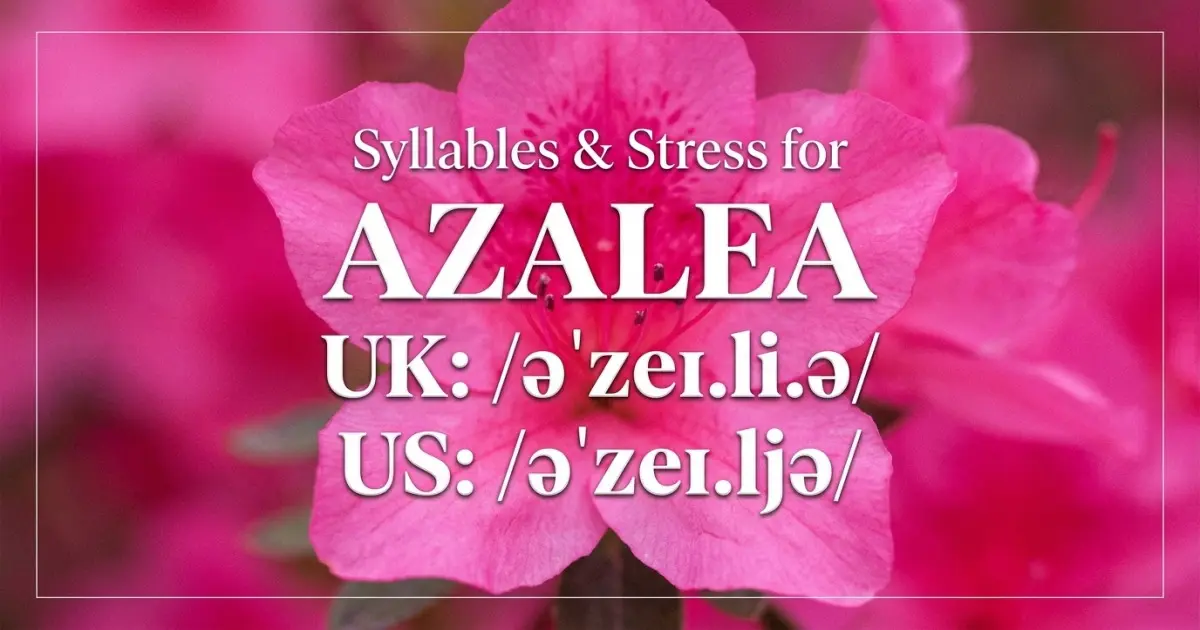
| US IPA | /əˈzeɪljə/ | In American speech, the final two syllables often compress slightly, so the name can feel smoother and quicker than it looks. |
| UK IPA | /əˈzeɪliə/ | In British speech, the last part is often opened a little more clearly, which gives the ending a touch more separation. |
| Syllables | 4 syllables | Hear it as a soft beginning, one bright stressed center, then a flowing finish. |
| Stress pattern | Primary stress on the second syllable | The name should sound like uh-ZAY-lee-uh, not AZ-uh-lee-uh. |
| Opening sound | /ə/ + /z/ | The first syllable is reduced and light; do not over-pronounce it as a heavy “az.” |
| Middle sound | /zeɪ/ | The long ay sound is the spine of the name. It should be the clearest part. |
| Ending sound | /ljə/ or /liə/ | The ending should feel soft and floral, but still distinct enough that the name does not collapse into one blur. |
Azalea lives on the second syllable
The single most important fact about Azalea is that the name’s energy sits in the middle, not at the front. The stress belongs on ZAY. That is what gives the name its shape, and it is also what keeps four syllables from sounding heavy. English speakers often find long names easier when one syllable stands out cleanly as the center of gravity. Azalea does exactly that. Pronunciation lands more fully when the name’s roots and history are already in view, so begin with Azalea meaning.
The opening syllable is a schwa, the relaxed vowel sound written /ə/ in phonetics. In plain terms, that means the name should begin lightly, with something like uh rather than a forceful AZ. This is one reason the name feels more graceful in real life than it may first look on the page. The first syllable does not carry much weight. It simply leads into the name’s true arrival point.
Why the ZAY in Azalea matters so much
The stressed center of Azalea contains the long ay vowel, /eɪ/, and that is the brightest sound in the whole name. It is what listeners remember. It is also the point where the name stops looking like a long floral word and starts sounding like a well-organized first name. Without a clear ZAY, Azalea becomes mushy. With it, the name suddenly feels articulate and elegant.
The z itself is a voiced fricative, meaning the sound is made with airflow rather than a hard stop. That matters because it gives the name brightness without harshness. Azalea does not punch through its center. It glides through it.
How the ending of Azalea stays soft without disappearing
The last part of Azalea is where accent differences become most visible. In American English, the final syllables often compress into something closer to lyuh. In British English, the ending may open slightly more clearly into lee-uh. Both are normal. In both versions, the l is doing important work. It is a liquid consonant, which helps the name feel flowing rather than chopped into pieces. Once the sound pattern is clear, some shortenings stop feeling optional and start feeling natural, and the clearest map is in Azalea nicknames.
This liquid quality is part of what makes Azalea feel floral and feminine. But the ending should not be so relaxed that the name loses definition. You want softness, not spillage.
Azalea across accents is different at the edges, not in the center
The supplied IPA forms show a small but meaningful difference between American and British pronunciation. In the United States, Azalea is often /əˈzeɪljə/. In the United Kingdom, it is commonly /əˈzeɪliə/. The essential identity is the same in both: same stress, same long ay center, same light opening. The difference lies mainly in how the ending is handled.
American Azalea usually sounds a little more compressed
American speech often pulls the final syllables closer together, producing something that feels like uh-ZAY-lyuh. This is natural and common in English. It makes the name move faster and can even make it feel slightly more modern and streamlined.
British Azalea often keeps the ending more open
In British speech, the last part more often sounds like lee-uh, with a little more separation between the two final vowels. This can make the name feel slightly more delicate or more transparent to the eye. But it does not create a different name. It simply makes the final petals open a little wider.
In both cases, the most important thing remains unchanged: the name must rise into ZAY. That is what keeps Azalea recognizable across accents.
Where Azalea most often gets mispronounced
Because Azalea looks lush and slightly unusual, people sometimes overthink it. The most common mistakes happen when a speaker either stresses the wrong syllable or treats the spelling too mechanically.
The first common mistake is hitting the opening too hard
Some people instinctively say something closer to AZ-uh-lee-uh. That shifts the stress to the front and makes the name sound much heavier. It also strips away the natural flow that gives Azalea its appeal. The opening should be lighter and less dramatic than the center.
The second common mistake is flattening the middle
If the ZAY is shortened too much, Azalea loses its strongest feature. The name may still be understandable, but it no longer sounds polished. The long middle vowel is the spine of the pronunciation. It needs to be heard clearly.
The third common mistake is letting the ending blur completely
Especially in fast speech, speakers can swallow the final syllables too much, reducing the name to something that sounds closer to uh-ZAY-luh. A little compression is normal, especially in American English. Total collapse is not. The ending should remain soft but audible.
Azalea beside its sound-neighbors
One useful way to hear Azalea clearly is to compare it with nearby names. It shares some musical territory with names like Azaria, Amelia, and Rosalia, all of which use flowing vowels and a lifted center. But Azalea differs in one important way: its stress is sharper and brighter. The z in the middle gives it more sparkle and more contour than many other four-syllable floral or lyrical names.
It also sits near variant forms such as Azalia or Azalee, which the project books list as alternate spellings or related forms. That context is useful because it shows the pronunciation logic is not random. Azalea belongs to a small family of related names and variants, but the fact-packet form remains the most familiar and broadly usable in English-speaking contexts.
Saying Azalea well in real life: three practice lines
Start with the plain form
Azalea is here.
This helps isolate the stress pattern. Keep the opening light and make sure ZAY lands clearly.
Then use Azalea in a natural sentence
Azalea will call you back this afternoon.
This checks whether the name still sounds smooth at normal speed rather than only when spoken carefully.
Finally, pair Azalea with a surname
Azalea Jane Carter is ready.
Or any full combination you are considering. This is the most useful test because long names are almost never spoken alone. The real question is whether Azalea keeps its line once the full name is moving.