
How to Pronounce Augustus: How the Name Is Usually Said
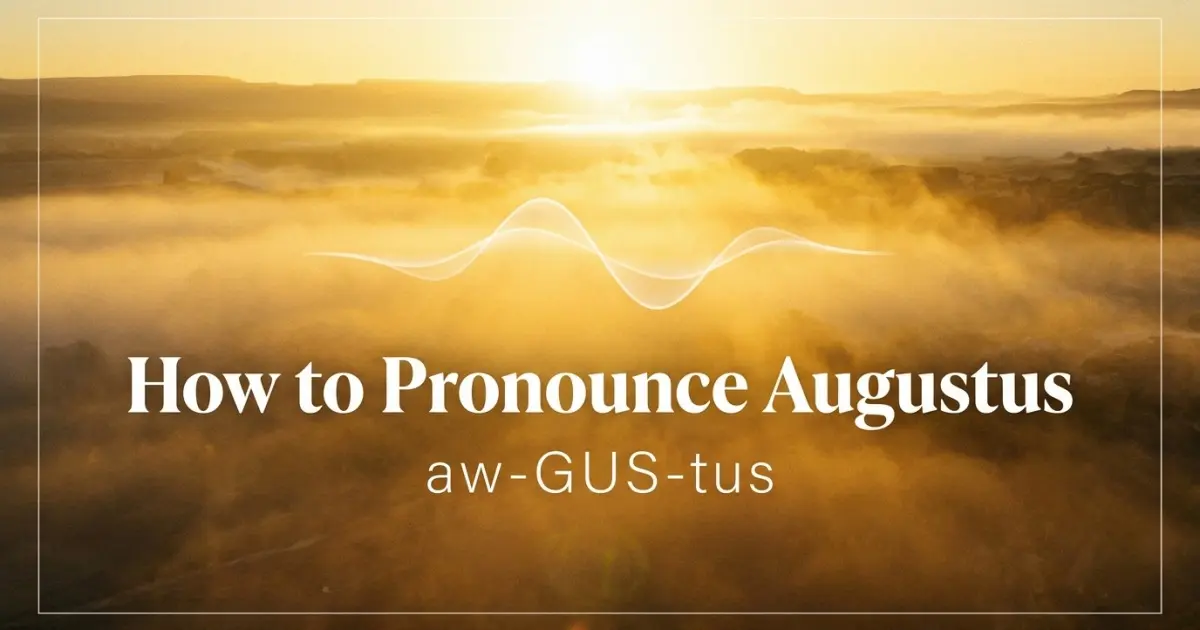
Imagine a formal name being read at a graduation, a pediatric appointment, or the first day of school: “Augustus.” The spelling looks stately, but the sound should not feel stiff. The name does not begin with its strongest beat. It rises toward the center, landing on GUS, then closes softly: aw-GUS-tus. That middle stress is what keeps Augustus from feeling too heavy. It gives the name architecture.
Augustus is Latin in origin, means “great; venerable,” and is pronounced aw-GUS-tus. Official data shows Augustus ranked No. 408 for boys in the United States in 2024, which means the name is established enough to be recognizable while still retaining a distinctive formal presence. The pronunciation rule is simple but important: keep all three syllables, make GUS the strongest part, and let the final -tus close lightly rather than heavily.
Augustus Is Said by Letting the Name Rise Into “GUS”
| Element | Phonetic Detail | Quick Tip |
|---|---|---|
| Everyday pronunciation | aw-GUS-tus | Let the name build toward the middle syllable, then close gently. |
| Syllable count | 3 syllables | Break it into aw + GUS + tus, not AU-gus-tus or aw-gus-TUS. |
| Stress pattern | Second-syllable stress | The middle syllable should be the strongest and clearest beat. |
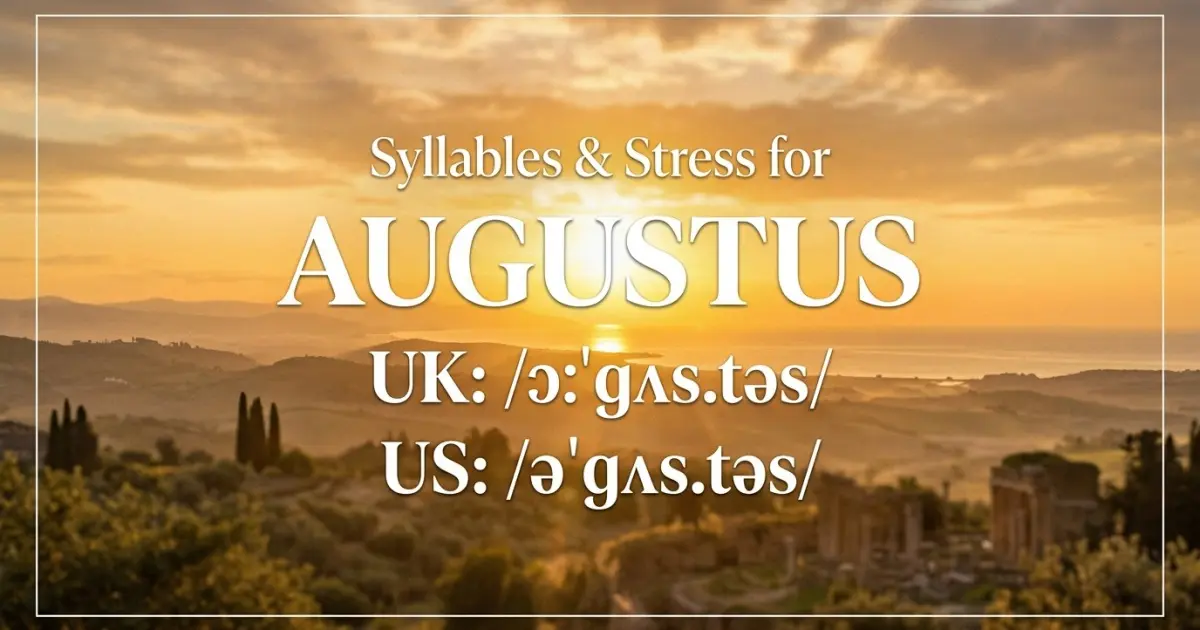
| U.S. IPA | /ɔːˈɡʌstəs/ | The stress mark before /ɡʌs/ shows that GUS carries the emphasis. |
| U.K. IPA | /ɔːˈɡʌstəs/ | The matching IPA form makes Augustus stable across major English accents. |
| Opening sound | aw | Begin broadly and lightly, without making the first syllable too strong. |
| Middle sound | GUS | This is the anchor of the name and the source of the nickname Gus. |
| Ending sound | tus | Keep the final syllable clear but unstressed. |
The Three Syllables of Augustus Should Feel Balanced, Not Heavy
Augustus has three syllables: aw, GUS, and tus. The middle syllable carries the stress, so the name should not sound like a flat row of equal beats. It should have a gentle rise and fall. The first syllable introduces the name, the second gives it force, and the third completes it with Latin firmness. Pronunciation lands more fully when the name’s roots and history are already in view, so begin with Augustus meaning.
This structure is what makes Augustus easier to say than it may first appear. The name looks long and formal, but the spoken rhythm is clear. Once the ear hears aw-GUS-tus, the name becomes natural. The central GUS gives the pronunciation a warm human core inside the larger, more ceremonial full name.
The opening “aw” should not take over
The first syllable should be audible, but it should not carry the strongest emphasis. Augustus is not AW-gus-tus. If the opening syllable becomes too forceful, the name can sound stiff or overly dramatic. A lighter opening lets the name move naturally toward the center.
The GUS syllable gives Augustus its spoken center
The middle syllable is the most important part of the pronunciation. It should be clear, strong, and easy to hear. This is also why Gus works so naturally as a nickname: it comes from the stressed center of Augustus, not from a random shortening.
The final “tus” should close the name lightly
The ending should not be swallowed, but it should also not become the main event. Augustus is not aw-gus-TUS. The final syllable should close the name with a light, clean finish. That balance keeps the full name dignified rather than cumbersome.
Augustus Sounds Stable Across U.S. and U.K. English
The U.S. and U.K. IPA pronunciation of Augustus is the same: /ɔːˈɡʌstəs/. That makes the name unusually stable across major English accents. Individual speakers may color the opening vowel slightly, but the main structure does not change. Augustus remains a three-syllable name with stress on the middle syllable.
This stability is helpful because Augustus already has a formal appearance. Parents do not need to worry about major U.S. and U.K. pronunciation differences. The practical guide remains aw-GUS-tus in both settings.
American pronunciation keeps the middle beat strong
In American English, Augustus should sound like aw-GUS-tus, with the strongest emphasis on GUS. The opening may sound broad, and the final syllable may reduce slightly in quick speech, but all three syllables should remain recognizable.
British pronunciation follows the same pattern
In British English, the pronunciation remains aw-GUS-tus. The name may be spoken with a slightly different vowel color depending on accent, but the stress pattern stays the same. The middle syllable is still the anchor.
Common Augustus Pronunciation Mistakes Usually Come From Misplaced Stress
Augustus is not difficult once its stress pattern is understood, but it can be misread because of its length and formal look. The most common mistakes are stressing the first syllable too heavily, stressing the final syllable, flattening all three beats, or confusing Augustus with August. The correction is simple: keep the full three syllables and let GUS lead.
Mistake one: saying AW-gus-tus
This version gives too much weight to the first syllable. The opening should introduce the name, not dominate it. The correct rhythm is aw-GUS-tus.
Mistake two: saying aw-gus-TUS
This version shifts the strength too far to the end. The final syllable should be clear but light. The middle syllable should carry the main emphasis.
Mistake three: making all three syllables equal
If every syllable receives the same weight, Augustus can sound slow and heavy. The name needs shape: lighter opening, strong middle, lighter close.
Mistake four: shortening Augustus to August in pronunciation
August can be a related short form or nickname, but Augustus in full has three syllables. The final -tus should be included when saying the complete name.
Augustus Has Formal Sound Neighbors, but “GUS” Makes It Approachable
Augustus sits near names such as August, Augustine, Atticus, Julius, Cassius, Aurelius, Maximus, and Octavius in style. These names share a formal, classical, or literary feeling. Augustus stands out because it combines a grand Latin shape with an unusually friendly center. The GUS syllable makes the name easier to live with than its length might suggest. Once the sound pattern is clear, some shortenings stop feeling optional and start feeling natural, and the clearest map is in nicknames for Augustus.
The meaning “great; venerable” gives Augustus a dignified presence, but the pronunciation keeps it from becoming distant. The name can be formal in full and warm in daily life. Spoken clearly, aw-GUS-tus has enough ceremony for official contexts and enough softness for family use.
Practice Augustus in everyday lines
“This is Augustus.”
“Augustus will be joining us today.”
“Can you give this to Augustus?”
“Augustus, your appointment is ready.”
“Congratulations, Augustus.”
Practice Augustus with full-name rhythm
Augustus James gives the name a crisp classic finish.
Augustus Henry keeps the full name warm and traditional.
Augustus Gabriel adds softness and dignity.
Augustus Leo gives the name a lighter classical rhythm.
Augustus Theodore creates a highly formal, literary cadence.
Augustus Pronunciation FAQ
How do you pronounce Augustus?
Augustus is pronounced aw-GUS-tus, with three syllables and stress on the middle syllable.
How many syllables are in Augustus?
Augustus has three syllables: aw, GUS, and tus. The middle syllable is the strongest.
What is the IPA pronunciation of Augustus?
The U.S. and U.K. IPA pronunciation of Augustus is /ɔːˈɡʌstəs/.
What pronunciation mistakes happen with Augustus?
The most common mistakes are stressing the first syllable, stressing the final syllable, flattening all three syllables, or shortening the full name to August. The standard pronunciation is aw-GUS-tus.