
How to Pronounce Amina: Sound Breakdown for Confident Speech
The true test of a name’s pronunciation rarely happens in private. It happens in public, in the ordinary institutions that turn a written name into a spoken identity: the teacher calling attendance on the first day of school, the nurse reading a waiting-room list, the announcer at a graduation, the receptionist at a front desk, the barista glancing up from a cup and deciding whether to trust the spelling or hesitate. Amina is the kind of name that often earns a second look from people who have seen it before but are not fully sure where the stress belongs. Yet once it is spoken correctly, the name feels natural almost immediately. That is one of its strengths.
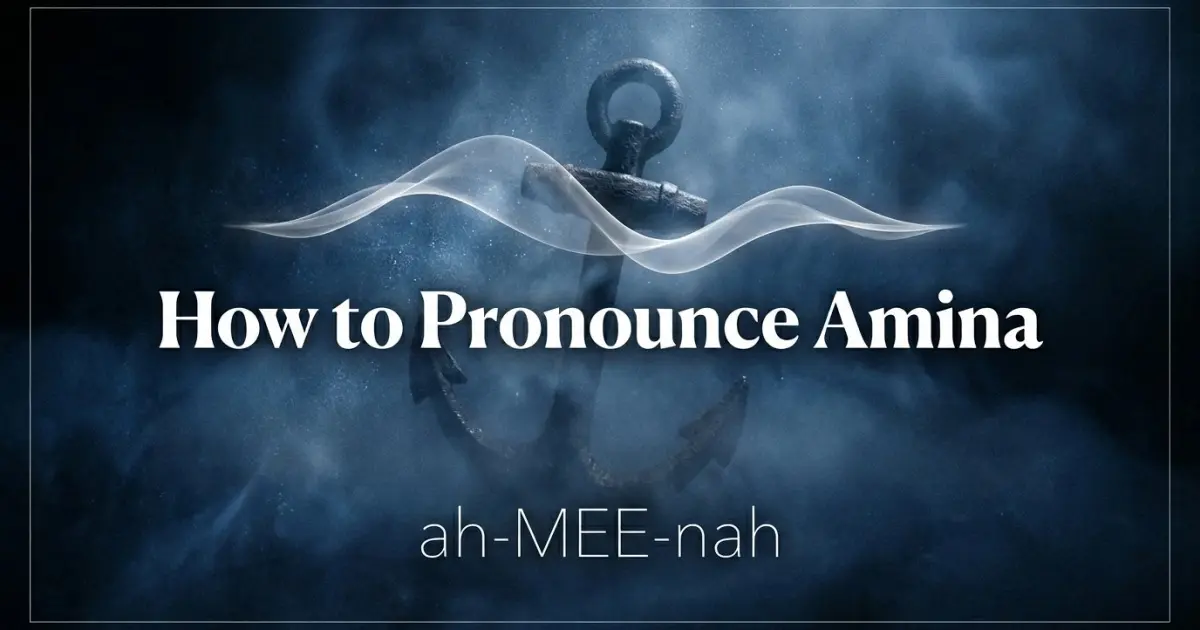
The standard pronunciation here is ah-MEE-nuh. It is a three-syllable name with the emphasis on the middle syllable. That middle stress matters. Without it, the name can flatten into something less elegant and less true to its internal shape. Said well, Amina opens softly, lifts at the center, and settles gently at the end. That rising middle is what gives the name its grace. It is also what makes the name so memorable in speech: calm at the edges, clear at the center.
What the pronunciation of Amina is really clarifying
Before getting into accent notes and common mistake patterns, it helps to set the structure out in one clean frame. Amina is not difficult, but every part of the pronunciation does specific work.
| Element | Phonetic Detail | Quick Tip |
|---|---|---|
| Standard pronunciation | ah-MEE-nuh | Let the middle syllable carry the emphasis. The first and last syllables should stay lighter. |
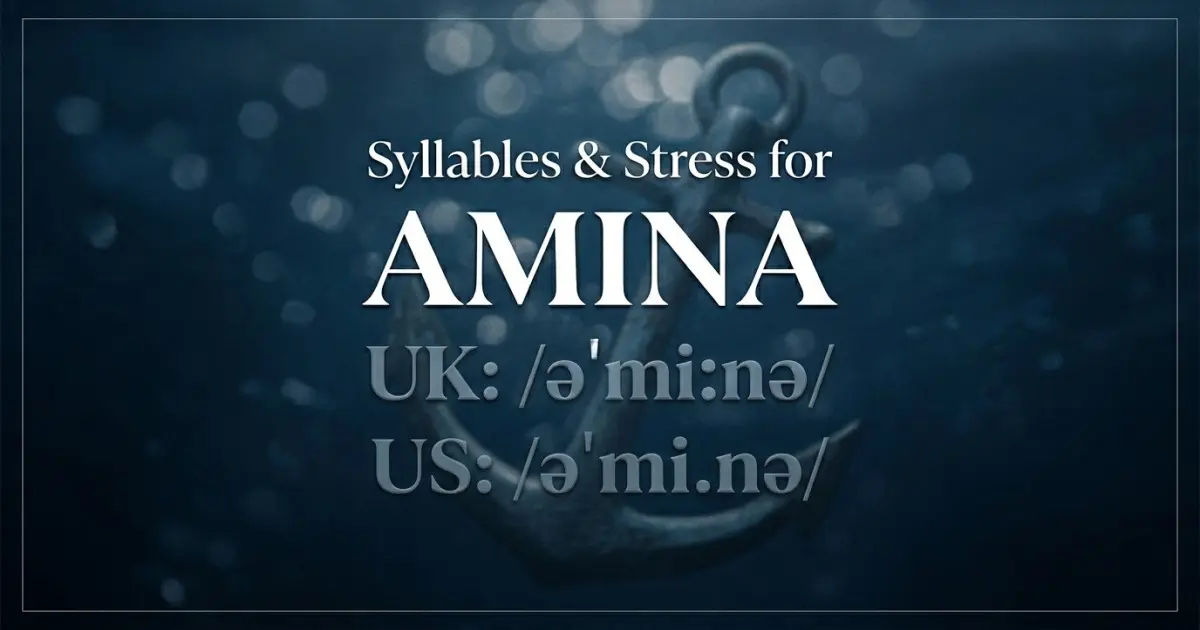
| IPA (US) | /əˈmiːnə/ | The opening is a soft schwa sound, like the first sound in “about,” not a hard “ay.” |
| IPA (UK) | /əˈmiːnə/ | The British form follows the same stress and vowel pattern, which makes the name highly stable across accents. |
| Syllable count | 3 syllables | Think of the name in three steps: ah / MEE / nuh. |
| Stress pattern | Primary stress on the second syllable | If you stress the first syllable instead, the name immediately loses its intended shape. |
| Ending sound | Final schwa | The last syllable is light and relaxed, more “nuh” than a strongly pronounced “nah.” |
Amina rises in the middle, and that is the whole secret
Many names are shaped by their beginning. Amina is different. Its identity is carried by the middle. The opening syllable is soft and almost modest. The last syllable closes gently. But the center, MEE, is where the name becomes fully itself. That middle stress is what gives Amina its dignity and flow. Before focusing only on syllables and stress, it helps to step back into the fuller frame of Amina meaning.
The opening of Amina should stay soft
The first syllable is represented in IPA as /ə/, the schwa sound. In plain terms, that means the opening should be light and unstressed. It is the kind of vowel English speakers already use constantly in everyday speech, often without noticing. In Amina, that opening keeps the name from sounding heavy or overannounced. It allows the name to enter gently.
This matters because some speakers instinctively want to harden the beginning, especially when encountering an unfamiliar name. But Amina does not begin by pushing forward. It begins by preparing the ear for the real emphasis to come later. That is part of why the name sounds elegant rather than abrupt.
The center of Amina is where the stress belongs
The second syllable, MEE, is long and clearly stressed. This is the beam that holds the whole pronunciation together. The long ee vowel gives the name brightness, while the stress gives it shape. Without that emphasis, the three syllables can blur together. With it, the name feels balanced and memorable.
Linguistically, this is also what makes Amina sound lyrical rather than flat. The strong middle creates a small arc in the mouth and in the ear. It gives the name lift. That lift is one reason Amina feels both gentle and poised at the same time.
The ending of Amina should close quietly
The final syllable, nuh, is light and unstressed. It should complete the name, not compete with it. If this last syllable is made too strong, the pronunciation begins to feel heavier than it should. Amina sounds best when the final vowel is relaxed and natural, allowing the middle stress to remain the center of gravity.
This is also where the name keeps its warmth. A clipped ending would make it sound too sharp. Amina avoids that by letting the last syllable soften the whole line.
Amina stays remarkably stable across accents
One of the practical strengths of the name is how little its pronunciation changes between major English accents. The U.S. and U.K. IPA forms are the same here, and that kind of stability is valuable. It means the name travels well. It may take on slight local color, but the overall structure remains intact.
How Amina tends to sound in American English
In American speech, the opening schwa is usually very relaxed, the middle MEE is bright and prominent, and the final syllable closes softly. The result is smooth and musical without being ornate. Most American English speakers can produce the name accurately once they hear the stress pattern one time.
The danger in American speech is usually not mispronouncing the vowels themselves, but misplacing the stress. Once the speaker understands that the second syllable carries the emphasis, the name becomes easy.
How Amina tends to sound in British English
In British speech, the same general structure holds: light opening, stressed middle, soft ending. There may be small differences in texture depending on region, but the name does not change identity. It remains ah-MEE-nuh. That consistency is one reason the name works so well internationally.
For families who want a name that keeps its elegance across borders, this matters. Amina does not require major adjustment when it moves between English-speaking settings.
Where people most often get Amina wrong
The most common errors do not come from difficult consonants or obscure vowels. They come from rhythm. Speakers tend to make one of two mistakes: they stress the wrong syllable, or they harden the edges of the name too much.
The most common mistake is stressing the first syllable
Because many English names are front-stressed, some people instinctively want to say something closer to AM-ih-nuh. That shifts the architecture of the name completely. Amina is not a first-syllable name in this pronunciation pattern. The second syllable must remain the emphasized one.
This is the most important correction to make. Once the stress is fixed, most other parts of the pronunciation fall into place on their own.
Another mistake is making the ending too broad
Some speakers naturally widen the final syllable into something closer to nah. In ordinary speech, the ending is usually lighter than that. It should feel relaxed and quick. Not swallowed, but not theatrical either. The best final syllable is the one that lets the center remain prominent.
Sound neighbors can mislead the ear
Amina sits near other names with similar sounds, and those neighbors can nudge pronunciation in the wrong direction. Names like Aamina, Ameena, Amna, or even names such as Imani and Aaliyah can encourage speakers to guess rather than listen to the actual rhythm in front of them. The safest guide is to remember the structure itself: soft opening, stressed MEE, gentle finish. Once the sound pattern is clear, some shortenings stop feeling optional and start feeling natural, and the clearest map is in Amina nicknames.
Amina becomes easy once you practice the rhythm in speech
The good news is that Amina is highly teachable. Once someone hears the stress pattern clearly, the name usually stays with them. This is not a pronunciation that requires unusual mouth movements or rare consonants. It only requires trusting the middle.
Practice Amina in three beats first
Say the name slowly as ah / MEE / nuh. Then connect the three parts without losing the emphasis on the center. The goal is not to make the name stiff or overcareful. It is simply to feel the rise in the middle before returning to a soft close.
Use short, real-life practice lines
These simple lines help settle the rhythm into natural speech:
Amina is here.
This is Amina.
Amina, your table is ready.
I’m looking for Amina.
In each line, the second syllable should still carry the main musical weight. If the name sounds flat, the stress has probably shifted too early. If it sounds heavy, the edges are probably being overpronounced.
How to correct Amina politely
If someone says the name incorrectly, the easiest correction is also the best one: “It’s ah-MEE-nuh.” Because the name is so phonetically smooth once heard, most people will adjust quickly. That is one of its real strengths. The pronunciation is not hard. It only needs the right center.