
Aliyah Name Meaning: Why It Still Feels Fresh and Timeless

Some names do not simply sit on a page. They move. Aliyah is one of them. Official Social Security Administration (SSA) data places it at No. 235 for girls in 2024, a position that says something important before any etymology begins: the name is known, but it has not gone flat through overuse. It still arrives with lift. That quality matters because Aliyah’s central idea is not only beauty or gentleness, but ascent. It is a name organized around upward motion. “Exalted” gives it dignity. “Rising” gives it momentum. Together they make a surprisingly complete portrait of what many parents want a modern girl’s name to do: sound graceful, but never passive; feel elevated, but not distant.
That double movement is why Aliyah has endured beyond trend cycles that briefly made similar vowel-rich names feel interchangeable. It is not merely airy. It has direction. When spoken well, it begins softly, opens at the stressed middle, and then releases into a light ending that feels unfinished in the best sense, as though the sound keeps traveling after the voice stops. The effect is subtle but powerful. Aliyah suggests a person in motion toward something higher, not in the grandiose sense of spectacle, but in the older sense of growth, refinement, and inner rise. It is a compact name with vertical ambition built into its very meaning.
Aliyah's U.S. popularity rank over time, 1971–2024
Popularity statistics are based on official data from the Social Security Administration baby name records.
Aliyah: A Noble and Melodic Ascendant
Aliyah functions as a name with one unmistakable center of gravity, with the girls’ side of the chart providing its overwhelming visibility. Its sustained appeal likely stems from a blend of noble Arabic roots and a soft, rhythmic sound that makes it feel both ancient and contemporary .
The lack of meaningful crossover reinforcements its clear feminine clarity across generations. Meaning “exalted” or “rising,” its three-syllable melodic rhythm gives it a sense of character that feels both durable and stylish.
What the quick facts already reveal about Aliyah
| Key Facts | Information | Quick Insight |
|---|---|---|
| Name | Aliyah | The spelling feels contemporary and fluid, but the name’s core idea is older and more grounded than its modern look suggests. |
| Primary gender usage | Female | Aliyah carries softness in sound, yet its meaning gives it stature rather than delicacy alone. |
| Primary origin | Arabic | The Arabic root gives the name moral and social elevation, not just surface elegance. |
| Core meaning | Exalted; rising | This is a rare pairing: one part names status or dignity, the other names motion and becoming. |
| Pronunciation | uh-LEE-uh | The stress on the middle syllable makes the name feel light but clearly structured. |
| IPA | /əˈliːə/ | The sound pattern is simple enough for wide use, which helps explain the name’s staying power in English-speaking settings. |
| Syllable count | 3 | Three syllables give Aliyah musicality without making it feel elaborate or fragile. |
| U.S. girls’ rank (2024) | No. 235 | It sits in the modern sweet spot: familiar enough to be easy, uncommon enough to keep its own identity. |
Aliyah is a name built on the language of ascent
Many names promise beauty. Fewer promise movement. Aliyah belongs to that smaller group. Its meanings, “exalted” and “rising,” are related but not identical, and that distinction is what makes the name so rich. “Exalted” suggests height already attained: honor, regard, elevation, esteem. “Rising” suggests height still in progress: lifting, unfolding, ascending, becoming. Together they create a name that feels neither static nor restless. Aliyah does not sound as though it is straining upward. It sounds as though upwardness belongs to it.
This matters because names often succeed not by what they literally define, but by the kind of inner motion they imply. Aliyah implies growth with grace. It does not present achievement as brute force. Nor does it present femininity as stillness. Instead, it offers a quieter vision of strength: a person who lifts rather than pushes, who advances through presence rather than noise. In an age when many parents want names that feel aspirational without sounding aggressive, Aliyah occupies an unusually elegant middle ground.
The upward thread also helps explain why the name feels emotionally clean. It does not lean into sweetness so far that it becomes decorative, and it does not lean into power so far that it becomes hard. “Exalted” gives it poise. “Rising” keeps it alive. The combination makes Aliyah sound like a name for someone who is not only admired, but still in motion toward her own fuller self.
Why “exalted” gives Aliyah more than prettiness
The word “exalted” can easily be misunderstood if read too quickly. In everyday English it may sound ceremonial, even distant, but in naming it does more human work than that. It suggests honor, esteem, and a position lifted above the ordinary. That does not have to mean status in a worldly or arrogant sense. In many naming traditions, elevation means dignity. It signals that the child is being imagined as someone worthy of respect before she has done anything to earn public notice.

That is one reason Aliyah feels more substantial than some other soft, vowel-led names. The sound is smooth and contemporary, but the meaning underneath it is serious. Parents are not simply choosing a pretty sequence of letters. They are giving the child a name tied to worth and stature. The result is a kind of quiet formal strength. Aliyah does not announce itself as forceful, yet it rarely feels flimsy. The exalted quality keeps it upright.
This is also why the name ages so well. Names anchored only in sweetness can feel too slight once childhood passes. Names anchored only in authority can feel overly severe. Aliyah avoids both extremes because “exalted” is dignified without sounding heavy. It suggests a person who can carry herself with composure. On a small child, that meaning feels like hope. On an adult, it feels like fit.
How “rising” makes Aliyah feel unmistakably alive
If “exalted” is the still image, “rising” is the motion picture. This is the part of Aliyah that keeps the name from becoming merely noble or ornamental. Rising is a dynamic word. It belongs to mornings, beginnings, efforts, recoveries, awakenings, ambitions, and transformations. It contains not only height, but process. That one idea gives the name a forward-facing energy that modern parents often search for even when they do not describe it in those terms.
Names that suggest motion often feel psychologically hopeful because they leave room for growth. Aliyah does exactly that. It does not lock the child inside a fixed identity. Instead, it imagines development. A rising name feels like a name with horizon. That may be why Aliyah often reads as optimistic without becoming cheerful in a shallow way. It does not sound bubbly. It sounds ascending.
There is also a subtle social advantage here. “Rising” suggests effort without strain and ambition without abrasiveness. Many parents want names that can belong comfortably to a girl in every setting without forcing her into either softness or hardness. Aliyah manages this unusually well. Its forward motion is built into the meaning, but the sound remains graceful. The name does not have to shout progress. It already carries it.
Aliyah belongs to a broader spelling family without losing its own shape
Historically, naming guides often place Aliyah within a broader family of related forms such as Alia, Aaliyah, and Aliya. That context helps explain part of the name’s modern visibility. Aliyah is not a random contemporary invention. It is one spelling within an established cluster that has circulated widely enough to be recognized, yet flexibly enough to let different families choose the form that feels right in their own linguistic and visual setting.
That matters because spelling families change how a name lives in public. They can make a name more adaptable, but they can also blur its identity. Aliyah handles that tension well. It shares recognizable roots with its related forms, yet it remains distinct on the page. Compared with Aaliyah, it often feels slightly more streamlined. Compared with Alia, it feels a touch fuller and more visibly tied to the spoken rhythm uh-LEE-uh. In other words, Aliyah preserves familiarity while keeping a clear silhouette of its own. For related names from the same origin family, see browse Arabic baby names.
This is one reason the name can feel both contemporary and settled. The existence of alternate forms suggests history and circulation; the specific spelling Aliyah still feels chosen. It is recognizable, but not generic. That balance is difficult to achieve. Some names with multiple spellings start to feel unstable or uncertain. Aliyah usually does not. Its vowel sequence looks intentional, and the final h gives the name a slightly more finished visual line without altering its basic pronunciation.
There is a larger cultural point here as well. Names that travel across spelling patterns often survive better than names tied to one narrow fashion moment. Aliyah’s broader family has helped keep it legible and current, but the form itself still carries a distinct emotional texture: soft, lifted, and self-possessed.
What Aliyah sounds like in a room matters almost as much as what it means
Phonetically, Aliyah succeeds because it is simple without being plain. The pronunciation, uh-LEE-uh, places the main stress on the middle syllable, which immediately gives the name a center. The opening schwa is light and unobtrusive. The long ee vowel at the heart of the name brightens it. The ending opens out rather than shuts down. All three features together help the name sound lifted, which is strikingly appropriate for a name whose meanings point upward.
Its sound profile also explains some of its social versatility. Aliyah is easy to say aloud, easy to hear across a room, and easy to repeat after one correction if needed. That makes it a useful bridge name: distinctive enough to be memorable, smooth enough to be practical. The central vowel gives it radiance, while the ending keeps it from sounding clipped or abrupt. In linguistic terms, the name flows because it avoids dense consonant clusters and favors open syllables. In ordinary terms, it simply feels good in the mouth.
This is one area where Aliyah has an advantage over more ornate names with similar elegance. It does not ask much of the speaker. There is no difficult fricative, no awkward break, no heavy consonantal stop at the end. The result is a name that sounds airy without floating away. It holds shape. That is part of why it works so well across life stages. What begins as a soft, lovely name on a baby still sounds composed and articulate on an adult.
Aliyah in 2024 occupies a rare and useful place
Official SSA data showing Aliyah at No. 235 for girls in 2024 places it in one of the most attractive zones in the naming landscape. It is visible enough to feel current, but not so high that it risks losing individuality. Many parents say they want a name others can recognize without having three children in the same class answer to it. Aliyah is very close to that balance point. To explore more names that sit in this same category, see browse girl names.
Its placement also suggests durability rather than fad heat. The name benefits from several modern preferences at once: it is vowel-rich, rhythmically clear, feminine without being overly ornate, and familiar through related spellings. Yet it still feels like a choice rather than a default. That distinction matters. A name can be popular and still feel empty if it is chosen mainly because the culture is already repeating it. Aliyah has enough profile to be heard, but enough reserve to remain personal.
There is also something fitting about a name meaning “rising” holding a place just outside the most saturated part of the chart. It participates in contemporary taste without being consumed by it. It feels present, not crowded. For many families, that is exactly the right kind of visibility.
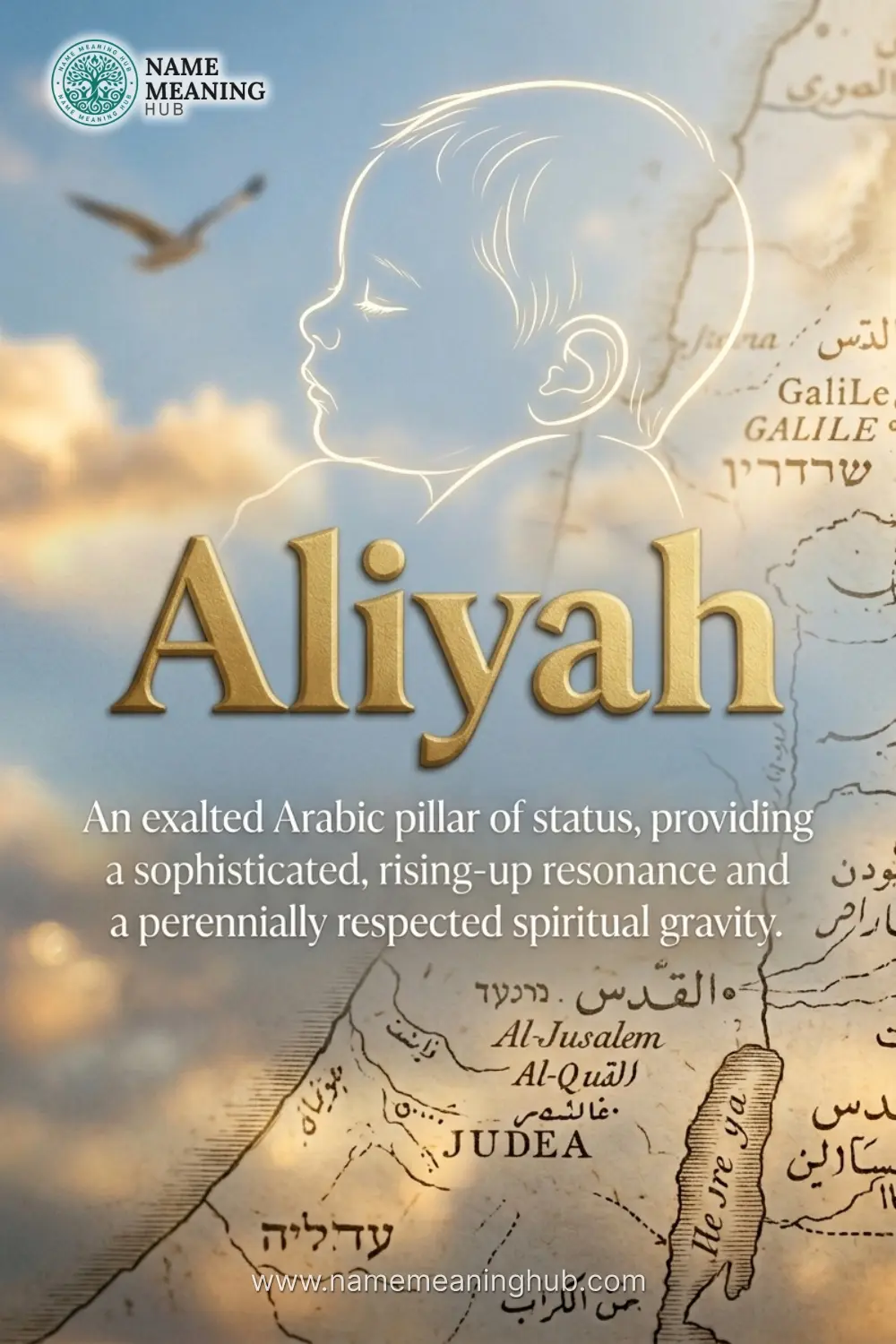
Where Aliyah’s story naturally opens next
Aliyah with middle names can tilt either luminous or grounded
Because Aliyah is already light and upward in sound, middle names usually work best when they either add steadiness or deepen the lyrical effect without making the full name feel too airy. The strongest pairings understand that Aliyah does not need rescuing from plainness; it needs framing. If you want the full pairing logic behind that contrast, see middle names for Aliyah.
Aliyah in nickname life tends to stay close to the full form
Aliyah is concise enough that many families use it whole, but its sound still invites affectionate shortenings and variant pet forms. The most successful nicknames usually preserve the central lee sound or the name’s soft, open finish. To see how those different moods shorten in real life, explore nicknames for Aliyah.
Saying Aliyah well is easier than the spelling may first suggest
The rhythm of uh-LEE-uh gives the name its lift. Once the stress lands correctly in the middle, the pronunciation feels natural and elegant rather than fragile or overcomplicated. If you want the full sound pattern behind that rhythm, read how to pronounce Aliyah.
Why Aliyah remains a name with altitude
Aliyah endures because it does two rare things at once. It sounds modern without being thin, and it carries aspiration without becoming grandiose. “Exalted” gives the name dignity. “Rising” gives it motion. Together they create a name that feels less like ornament and more like trajectory. That is a powerful gift to place in language around a child.
There is also a literary neatness to Aliyah that lingers after the facts are done. The name begins quietly, brightens at the center, and opens at the end. Its sound performs what its meaning announces. It lifts. For parents looking for a name that suggests both grace and becoming, Aliyah offers something unusually complete: a small name with real height inside it.