
How to Pronounce Ali: An Easy Sound-by-Sound Breakdown

Picture a name being read aloud at a school desk, a sports sign-in table, or a passport counter: Ali. It looks simple enough that most people will say it quickly, but the name still has one important pronunciation question. The standard form here is ah-LEE, a two-syllable name that begins openly and rises into the second syllable. Its elegance depends on that lift.
Because Ali is short, every sound matters. The opening vowel gives the name warmth, the central l keeps it smooth, and the final ee sound lets it finish lightly rather than abruptly. The name is Arabic in origin and means “exalted; noble,” and its pronunciation reflects that same upward feeling. Official data shows Ali ranked 323 for boys in the United States in 2024 and 2524 for girls, making it genuinely unisex but currently much more common for boys. In daily speech, the key is to keep Ali clear, two-beat, and lifted: ah-LEE.
How Ali Rises From a Soft Opening to a Clear Finish
| Element | Phonetic Detail | Quick Tip |
|---|---|---|
| Standard pronunciation | ah-LEE | Let the name rise into the second syllable rather than flattening both beats. |
| Syllable count | 2 syllables | Say it as two clean sounds: ah + LEE. |
| Main stress | Second syllable in the spoken guide | The strongest everyday cue is the lifted ending: ah-LEE. |
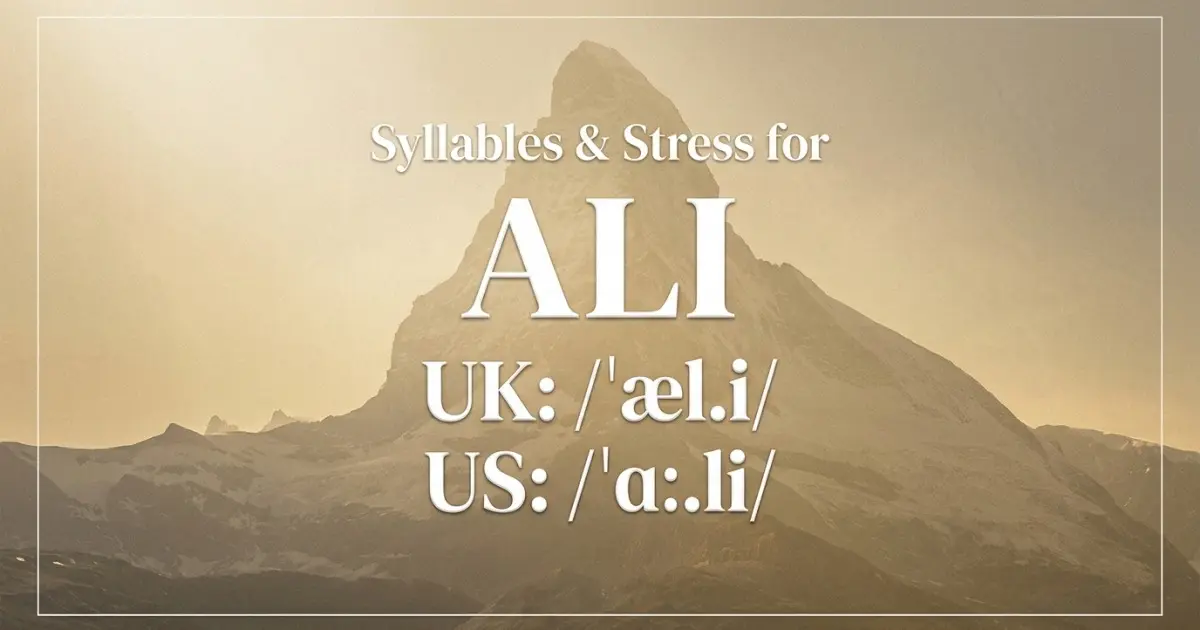
| U.S. IPA | /ˈɑːli/ | The American opening vowel is often broad and open. |
| U.K. IPA | /ˈæli/ | The British opening may sound shorter or brighter. |
| Core consonant | Liquid l | Keep the l smooth; it should connect the two vowels gently. |
| Ending sound | LEE | Finish with a clear ee sound, not a swallowed or clipped ending. |
The Two-Syllable Shape That Makes Ali Easy to Say
Ali has a simple spoken structure: ah-LEE. The name moves from an open vowel into a brighter final syllable. This gives it a clean, graceful rhythm that is easy to learn and easy to repeat. Because there are only two syllables, there is little room for confusion once the stress and vowel pattern are understood. The sound matters more once you know what the name is meant to carry, which is why the wider frame starts in Ali meaning.
The central sound is the l, a liquid consonant. Liquid consonants, such as l and r, allow sound to flow rather than stop suddenly. In Ali, the l acts as a smooth bridge between the opening ah and the final ee. That is why the name feels gentle even though it is very short.
The opening vowel should stay open
The first syllable should not be overcomplicated. In the pronunciation guide ah-LEE, the opening is open and relaxed. In American English, the vowel may sound broader, as reflected in /ˈɑːli/. In British English, the opening may sound brighter or shorter, as reflected in /ˈæli/. Those accent differences can change the color of the first syllable, but they do not change the name’s overall clarity.
The final LEE gives Ali its lift
The final syllable should be clean and audible. It should sound like Lee, not like a reduced or uncertain ending. This is especially important because Ali is so short. If the final sound is swallowed, the name loses much of its shape. A clear ah-LEE keeps the name bright, graceful, and complete.
Ali in American and British Accents
The U.S. and U.K. IPA forms show a difference in the first vowel. In American English, Ali is represented as /ˈɑːli/, which often gives the opening a broader sound. In British English, /ˈæli/ may make the first vowel sound closer to the a in words like cat or apple, depending on the speaker’s accent.
These differences are normal accent variation. The name remains short, vowel-rich, and easy to understand. The practical guide ah-LEE remains useful because it reminds speakers to give the name two syllables and preserve the bright final sound.
American Ali often sounds broader at the start
In many American voices, the opening of Ali may sound full and open. The name can feel smooth and spacious despite its brevity. The main thing to avoid is turning the name into a flat one-beat sound. It should keep its two-part movement.
British Ali may sound brighter in the first syllable
In British pronunciation, the first vowel may be shorter or brighter. This can make Ali sound slightly more clipped at the start, but the name still remains clear as long as the final Lee is present. The accent may shift the first vowel; it should not erase the second syllable.
Where Ali Is Most Likely to Be Mispronounced
Ali is generally easy to say, but its shortness creates a different kind of pronunciation risk. People may flatten it, confuse it with a nickname-like English form, or shift the vowel pattern based on familiar names. The best correction is usually simple: “It’s ah-LEE.”
Mistake pattern: AL-ee
Some English speakers may say Ali like AL-ee, rhyming the first syllable with the name Al. This can happen because the spelling resembles familiar English nickname forms. The intended guide here is ah-LEE, with a more open first syllable and a clearer rise into the second.
Mistake pattern: AH-lee with a weak ending
Another mistake is placing too much weight on the opening and letting the ending fade. Because Ali’s final sound is part of its grace, the LEE should stay audible. The name should not trail off.
Mistake pattern: one-syllable “Al”
Ali should not be reduced to Al unless someone is deliberately using that as a nickname. The full name has two syllables. Saying both syllables preserves its Arabic identity, its sound, and its meaning.
Sound Neighbors That Help People Remember Ali
Ali becomes easier to pronounce when heard beside familiar sound pieces. The ending is like the name Lee. The opening is an open ah sound. Together, they create the simple formula ah plus Lee. That makes the name highly teachable even for people encountering it for the first time. Once the sound pattern is clear, some shortenings stop feeling optional and start feeling natural, and the clearest map is in nicknames for Ali.
Ali also sits near other short, vowel-rich names such as Ari, Amir, Sami, Leo, Milo, and Kai. What makes Ali distinctive is the combination of Arabic origin, noble meaning, and smooth two-syllable sound. It is brief, but not abrupt; simple, but not empty.
The liquid l keeps Ali gentle
The l sound gives Ali its softness. Unlike a hard stop consonant such as t or k, the l lets the name move. This is why Ali feels warm and fluid rather than sharp.
The final vowel keeps Ali open
Because Ali ends in a vowel sound, it feels open and approachable. The name does not close with a heavy consonant. That open ending helps it work across childhood, adulthood, formal settings, and affectionate family speech.
Practice Lines for Saying Ali Naturally
The best way to settle into Ali’s pronunciation is to say it in ordinary sentences. Because the name is short, it should remain clear even when spoken quickly.
- This is Ali. Keep both syllables clear: ah-LEE.
- Ali is here. Let the final ee sound stay audible before the next word.
- Can you call Ali? Avoid reducing the name to one syllable.
- Welcome, Ali. This tests how the name sounds in formal settings.
- Ali, are you ready? Useful for hearing the name as direct address.
- My child’s name is Ali. A natural line for parent introductions.
When pairing Ali with a surname, listen for vowel flow. A surname beginning with a vowel can glide smoothly after Ali, but it may also blur if spoken too quickly. A surname beginning with a clear consonant often creates a stronger break. Since Ali is short, the full name should be tested at normal conversational speed.