
Alfie Pronunciation: An Easy Guide to Saying It Naturally
Alfie is the kind of name that often gets spoken before anyone stops to analyze it. A parent says it across a playground. A teacher reads it from a class list. A barista repeats it back over a counter. In each case, the name tends to land quickly and cleanly. That ease is part of its appeal. Official data shows Alfie remains relatively uncommon for boys in the United States in 2024, yet the pronunciation itself rarely feels foreign or difficult. Even people meeting the name for the first time usually sense how it should move: bright at the front, light at the finish, and friendly all the way through.
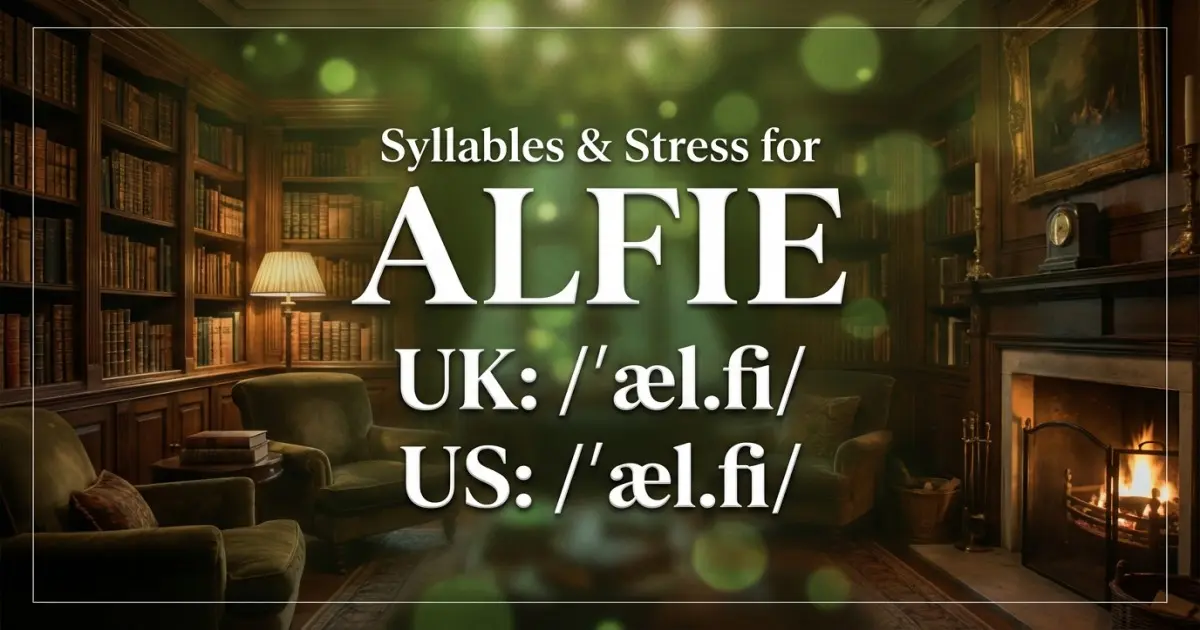
The standard form is AL-fee. It has two syllables, with the stress on the first. In both American and British IPA, it is commonly written as /ˈælfi/. That shared transcription is worth noticing. Some names shift significantly across accents, but Alfie stays remarkably stable. The sound pattern is simple and durable: a short, open first syllable followed by a clear long ee ending. What makes the name memorable is not difficulty. It is the opposite. Alfie sounds approachable because it wastes no motion.
How Alfie Is Actually Said in Everyday Life
| Element | Phonetic Detail | Quick Tip |
|---|---|---|
| Everyday pronunciation | AL-fee | Say it in two clean beats, with the first syllable carrying the weight. |
| US IPA | /ˈælfi/ | The opening vowel is short and direct, like the a in cat. |
| UK IPA | /ˈælfi/ | The form is essentially the same, which makes Alfie unusually stable across English accents. |
| Syllable count | 2 syllables | Do not stretch it into three parts. Alfie sounds best when it stays compact. |
| Stress pattern | First syllable stressed | If the second syllable gets too much emphasis, the name loses its natural balance. |
| Key consonants | /l/ + /f/ in the middle | The smooth l and crisp f are what keep the name bright instead of blunt. |
| Ending | Long ee sound /i/ | Finish clearly. The last syllable should sound cheerful, not swallowed. |
The table clarifies the central point: Alfie is simple, but not shapeless. Its friendliness comes from a very specific rhythm. Once that rhythm is right, the name usually sounds natural immediately.
Alfie Finds Its Shape in the First Syllable
Why the stress belongs on AL
The first syllable is where Alfie establishes itself. AL is short, strong, and easy to hear, which is why the name feels confident without sounding forceful. In phonetic terms, the stress falls at the front: AL-fee, not al-FEE. That front-loaded pattern matters because it gives the name its steadiness. If the second syllable is stressed too heavily, Alfie begins to sound sing-song or overperformed. Pronunciation lands more fully when the name’s roots and history are already in view, so begin with Alfie meaning.
This stress pattern also helps explain why the name works so well in daily life. A strongly stressed opening syllable is easy to catch in noisy settings. That is useful in schools, parks, and family homes, where names are often heard before they are seen. Alfie’s rhythm lets it announce itself quickly.
What the sounds inside Alfie are doing
Alfie begins with a short /æ/ vowel, the same broad front vowel heard in words like cat or apple. That keeps the opening grounded and familiar. The /l/ that follows is a liquid consonant, which means it helps the sound move smoothly rather than stop abruptly. Then comes /f/, a fricative. Fricatives are made by narrowing the flow of air, and they often create a clear but gentle edge. In Alfie, the f does important work. It keeps the name from feeling mushy.
Finally, the name ends on /i/, the bright ee sound. That ending lifts the whole form. It is one reason Alfie sounds warm and cheerful rather than heavy. Without that final vowel, the name would feel much more abrupt. With it, the name opens outward.
Alfie Across American and British Speech Hardly Changes at All
Why the IPA stays the same
Many names shift noticeably between American and British pronunciation, but Alfie is unusually stable. Both forms are commonly represented as /ˈælfi/. That does not mean every speaker sounds identical. Small differences in vowel color and pacing will still appear from region to region. But the structure of the name remains steady enough that most listeners hear the same basic pronunciation in both places.
This stability is one of Alfie’s practical strengths. Parents often want names that can travel well across accents without constant correction. Alfie does that. It is compact, phonetic, and hard to distort significantly.
What may still shift very slightly
In some voices, the first vowel may sound a touch broader or flatter. In others, the final ee may be clipped more tightly or held a fraction longer. But these are minor accent textures, not real changes to the name. Unlike names that split into several accepted English pronunciations, Alfie stays close to one lane.
That consistency also helps explain the name’s appeal in modern life. A name with an unusual meaning can still feel easy to use if the sound is straightforward. Alfie benefits from exactly that combination.
Where Alfie Can Be Misheard or Slightly Missaid
Swallowing the final ee
The most common issue is not a dramatic mispronunciation. It is clipping the ending too quickly. If the final syllable disappears, Alfie can start sounding closer to Alf than to the full name. That may be fine in nickname use, but it is not the same as saying Alfie clearly. The fix is simple: keep the second syllable audible, even though it is lighter than the first.
Overemphasizing the second syllable
Some speakers, especially when reading the name carefully for the first time, may give too much force to the fee ending. That pulls the name out of balance. Alfie should sound relaxed and front-led, not theatrical. The second syllable should be clear, but not dominant.
Confusing Alfie with related sound neighbors
Because Alfie belongs to a small family of similar names, listeners may occasionally hear it near neighbors like Alf, Alfred, or even other Al- names when spoken quickly. One useful way to understand Alfie’s shape is to compare it with those nearby forms. Alf is shorter and stops hard. Alfred is heavier and more formal. Alfie stays lighter because of the final ee, which keeps the whole name socially easier and more buoyant. Once the sound pattern is clear, some shortenings stop feeling optional and start feeling natural, and the clearest map is in nicknames for Alfie.
That comparison helps the ear hear the specific job of the ending. It is not decorative. It is what makes Alfie feel distinctly like Alfie.
Practicing Alfie Until It Sounds Effortless
Break Alfie into two clean beats
The easiest practice method is to say the name slowly as two parts: AL + fee. Once that feels natural, increase the speed without changing the stress pattern. The first syllable should still lead. The second should stay clear and bright.
It can also help to hear Alfie in contrast with nearby names. Say Alf, then Alfie. Say Alfred, then Alfie. This makes the role of the final vowel more obvious and helps keep the name from being clipped too sharply.
Practice lines that sound like real life
Pronunciation becomes more natural when practiced inside full phrases rather than in isolation. These simple lines work well:
- Alfie, your turn.
- This is Alfie from preschool.
- Alfie will be here soon.
- Have you met Alfie yet?
If the name stays clear inside those ordinary sentences, the pronunciation is in good shape. That is the real test. A well-pronounced name should sound natural at family speed, not only in a careful explanation.
Why Alfie Sounds Friendly So Quickly
Alfie works phonetically because every part of it helps the next part along. The short first vowel is familiar. The liquid l keeps the name moving. The fricative f adds a little crispness. The bright final ee lifts the tone. Nothing in the name is difficult, but nothing is sloppy either. That balance is why Alfie often feels affectionate without sounding childish and approachable without sounding vague.
In the end, the pronunciation advice for Alfie is wonderfully simple: say it in two beats, keep the stress on AL, and let the ee ending ring clearly. The name does not need ceremony. Its charm lies in how easily it speaks.
Alfie Pronunciation FAQ
Is Alfie pronounced the same in American and British English?
Usually, yes. Both are commonly represented as /ˈælfi/, with only minor accent differences in tone rather than in structure.
How many syllables does Alfie have?
Alfie has two syllables: AL-fee. The name sounds best when it stays compact and does not get stretched.
Where does the stress go in Alfie?
The stress goes on the first syllable. The strongest part of the name is AL, while the second syllable remains lighter and bright.
What pronunciation mistake is most common with Alfie?
The most common issue is clipping the ending too much or swallowing the final ee. A clear second syllable keeps the name sounding complete.