
How to Pronounce Alaina: The Easy Way to Say It Right
The real pronunciation test for a name rarely happens in a quiet room with a phonetic guide beside it. It happens at the pediatrician’s desk, in the pause before a teacher reads from the class list, at airport check-in, or when someone hears the name once at a birthday party and has to say it back correctly without seeing it written down. Alaina is the kind of name that usually lands well in those moments. It looks graceful, even a little delicate, but it behaves with more clarity than many equally lyrical names. Once heard, it tends to stay fixed in memory.
That is because Alaina has a very clean internal structure. It does not drift forward from the first syllable and fade away. It gathers itself in the middle. The name opens lightly, rises to a strong center, and settles into a soft close. That three-part movement is what gives Alaina its poise. It sounds feminine and warm, but it never feels shapeless. In everyday speech, that balance makes a difference. A name that sounds beautiful on paper but collapses in the mouth can become tiring to correct. Alaina avoids that problem by being more architecturally sound than it first appears.
What the pronunciation of Alaina is actually clarifying
| Element | Phonetic Detail | Quick Tip |
|---|---|---|
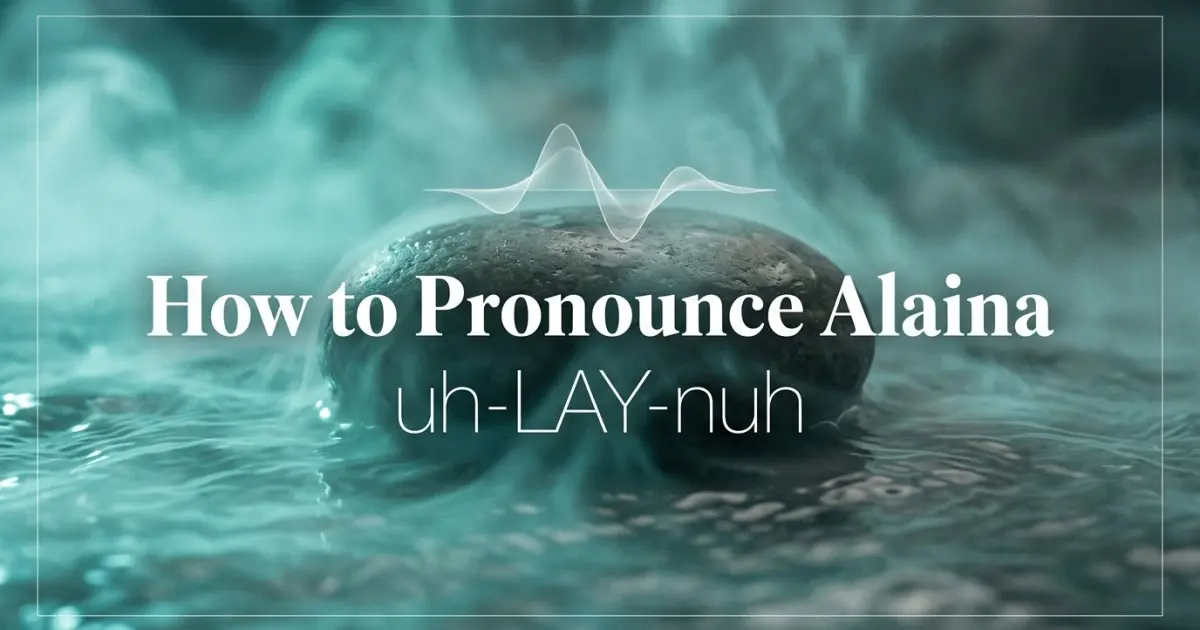
| Standard Pronunciation | uh-LAY-nuh | Keep the opening light, land firmly on “LAY,” and let the ending soften. |
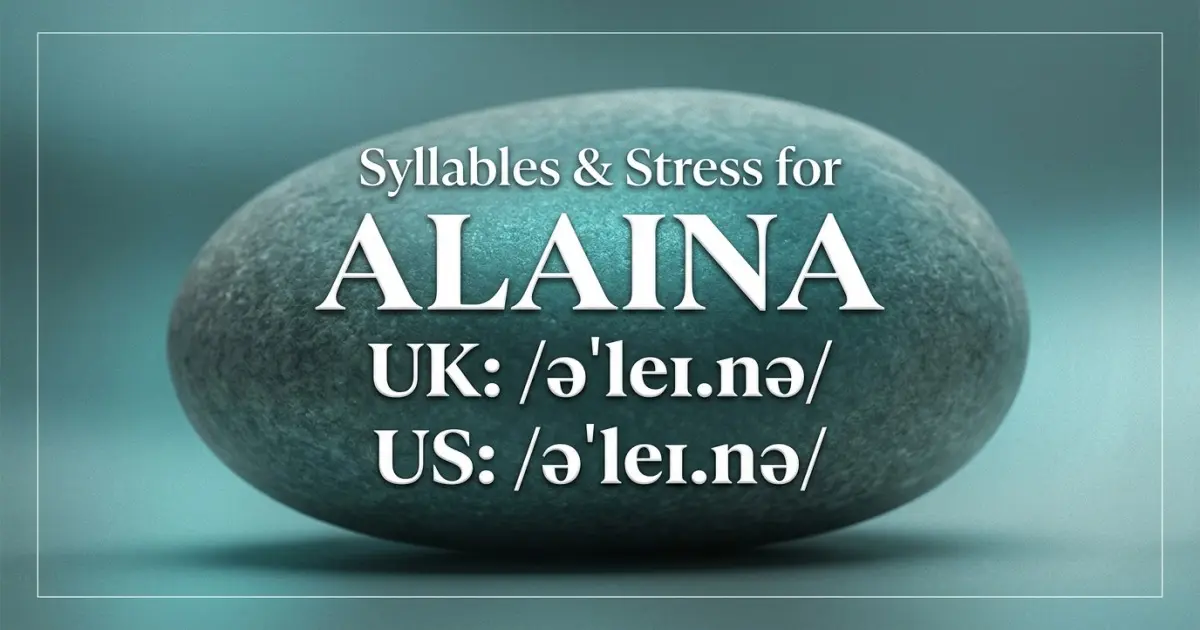
| IPA (US) | /əˈleɪnə/ | The stress mark shows the second syllable is the strongest point of the name. |
| IPA (UK) | /əˈleɪnə/ | The same pattern in both major English forms makes the name unusually stable. |
| Syllables | 3 syllables | Say it in three clear beats: uh / LAY / nuh. |
| Stress Pattern | Primary stress on the second syllable | The name should rise into the middle, not begin heavily on the first syllable. |
| Opening Sound | /ə/ schwa | The first syllable is gentle and reduced, more like a soft “uh” than a full “ah” or “ay.” |
| Center Sound | /leɪ/ with a liquid consonant and long A | This is the heart of the name: clear L, then “ay” as in “day.” |
| Ending | /nə/ with a schwa | Finish softly with “nuh,” not a strongly pronounced “nah.” |
Alaina works because the middle of the name carries the weight
The single most important thing to know about Alaina is that the stress belongs on the second syllable. The name should sound like uh-LAY-nuh, not AH-lay-na and not uh-lay-NAH. This matters because the entire shape of the name depends on that lift into the middle. Without it, Alaina loses some of its poise and starts to sound flatter or more uncertain than it should. Pronunciation lands more fully when the name’s roots and history are already in view, so begin with Alaina meaning.
Why the opening of Alaina should stay light
The first syllable in Alaina is a schwa, the relaxed “uh” sound that English uses constantly in unstressed syllables. That means the beginning of the name is not meant to carry much weight. It serves as a soft runway into the stronger center. This is one reason Alaina sounds elegant rather than abrupt. The name does not attack the ear. It unfolds. The way the name resolves at the end often decides which short forms feel natural in speech, and that becomes clearer in Alaina nicknames.
In practical speech, this also makes the name easier to say than it looks. Once speakers stop trying to make the opening syllable too important, the whole name settles into a very natural rhythm. The first syllable should be present, but never heavy.
Why “LAY” is the center of gravity
The second syllable is where Alaina becomes itself. The /l/ at the front of the syllable is a liquid consonant, which means it allows the sound to flow smoothly rather than stop sharply. Then comes the /eɪ/ vowel, the same long “ay” sound heard in words like “day” or “say.” Together, these sounds make the center of Alaina feel lifted, clear, and warm.
This middle-stressed pattern is a major part of the name’s appeal. It gives Alaina more internal structure than many soft three-syllable names. The name sounds graceful, but not vague. It rises, lands, and then resolves.
Alaina ends softly, and that softness is what keeps the name from sounding stiff
The final syllable, /nə/, is quiet but important. It contains the nasal consonant /n/, followed by another schwa. This gives the end of the name a gentle release. Instead of closing with a hard consonant or a dramatic vowel, Alaina relaxes. That softness is part of why the name feels warm and approachable in daily life.
Why the schwa matters at the end
In English pronunciation, the schwa is one of the key sounds that makes names flow naturally in conversation. In Alaina, it prevents the final syllable from becoming theatrical. The name should not end with a full, heavily spoken “nah.” It should end more lightly: “nuh.” This distinction may sound small, but it changes the overall impression of the name. A soft ending keeps Alaina elegant. An over-emphatic ending can make it sound overperformed.
How the three-syllable rhythm helps memory
Three-syllable names often become memorable when the stress is clearly placed and the ending does not fight the center. Alaina does this very well. The listener hears a soft setup, a strong middle, and an easy finish. That internal logic helps the name stay in the ear after one hearing. It also makes it less likely to be scrambled in fast speech.
This is one reason Alaina behaves so well in public life. It sounds lyrical, but it is actually quite orderly. That order is what makes it practical.
Alaina stays stable across accents, which is one of its strongest practical advantages
One of the most useful details about Alaina is that the IPA remains the same in both U.S. and U.K. English: /əˈleɪnə/. That kind of stability is more valuable than it first appears. Many names that look elegant on paper pick up different stress patterns, vowel colors, or endings in different accents. Alaina is less vulnerable to that. Its structure travels well.
What may shift slightly in real-world speech
Even when the IPA is the same, individual speakers may vary a little. Some will make the opening schwa almost disappear. Some will hold the long “ay” very cleanly. Others may let the final schwa sound a touch fuller or lighter depending on region or speaking speed. But those are small differences in color, not in identity. The name remains recognizably Alaina.
Why that stability matters socially
A name that stays stable across accents places less burden on the person carrying it. It reduces repeated corrections and helps the name feel at home in more than one setting. Alaina benefits from that. It sounds polished, but not fragile. It can move through classrooms, workplaces, and multilingual circles without becoming uncertain or inconsistent.
Where people most often mispronounce Alaina
Because Alaina looks lyrical, most pronunciation errors come from over-reading it. People assume the name needs more flourish than it actually does, or they move the stress to the wrong place.
The first-syllable stress mistake
One common error is treating the first syllable as though it should sound fuller and stronger, producing something closer to AH-lay-na. That changes the emotional rhythm of the name. Alaina is not meant to begin with a bold attack. It should ease in and rise toward the middle.
The over-heavy ending mistake
Another mistake is ending on a pronounced “nah,” which can make the name sound more dramatic than intended. The last syllable should be lighter than the center. If the final beat becomes too strong, the whole name loses some of its balance.
Confusion with neighboring names
Alaina sits close to names like Alayna, Elena, Elaina, and Alana in the wider English-speaking ear. That means people may occasionally lean toward a familiar neighbor if they only glance at the spelling. But once the name is heard correctly as uh-LAY-nuh, it usually settles quickly because the stress pattern is so clear.
Alaina becomes easiest when spoken inside real phrases
Names are rarely spoken in isolation. They are usually heard in greetings, roll calls, invitations, and affectionate commands. Alaina becomes especially easy once it is placed inside ordinary speech.
Useful practice lines for Alaina
- “Alaina is here.”
- “This is Alaina.”
- “Alaina, come with me.”
- “We named her Alaina.”
- “Alaina sounds strongest in the middle.”
If these phrases feel natural when the first syllable stays light and the second syllable carries the strongest beat, the pronunciation is already in the right place. That is the practical secret of Alaina. The name looks graceful, but its grace comes from a very clear structure.