
How to Pronounce Adaline: Stress, Rhythm, and the Most Typical Errors
The real pronunciation test for a name rarely happens in a baby-name book. It happens when a teacher pauses at roll call, when a nurse calls from a waiting room, or when someone sees the name on a calendar invite and has one brief moment to decide how to say it in front of everyone else. Adaline is exactly the kind of name that creates that pause. It looks familiar, but not entirely simple. Most readers can feel its elegance at once, yet the final syllable is where uncertainty can creep in.
That is why pronunciation matters so much here. Adaline is a lyrical name, but it only stays graceful if the rhythm is clear. The supplied everyday guide gives AD-uh-lyn, while the supplied IPA is /ˈædəlaɪn/. That small tension tells you something useful: in real life, the first two syllables are rarely the problem. The real question is how the ending is heard. Once a family decides which spoken form they want, the name becomes easy to carry. Until then, it is a name that can attract a second look from the mouth before it settles.
What people are really trying to pin down when they ask how Adaline is said
| Element | Phonetic Detail | Quick Tip |
|---|---|---|
| Everyday spoken guide | AD-uh-lyn | Think of a firm “Ad,” a soft middle “uh,” and a light final “lyn.” |
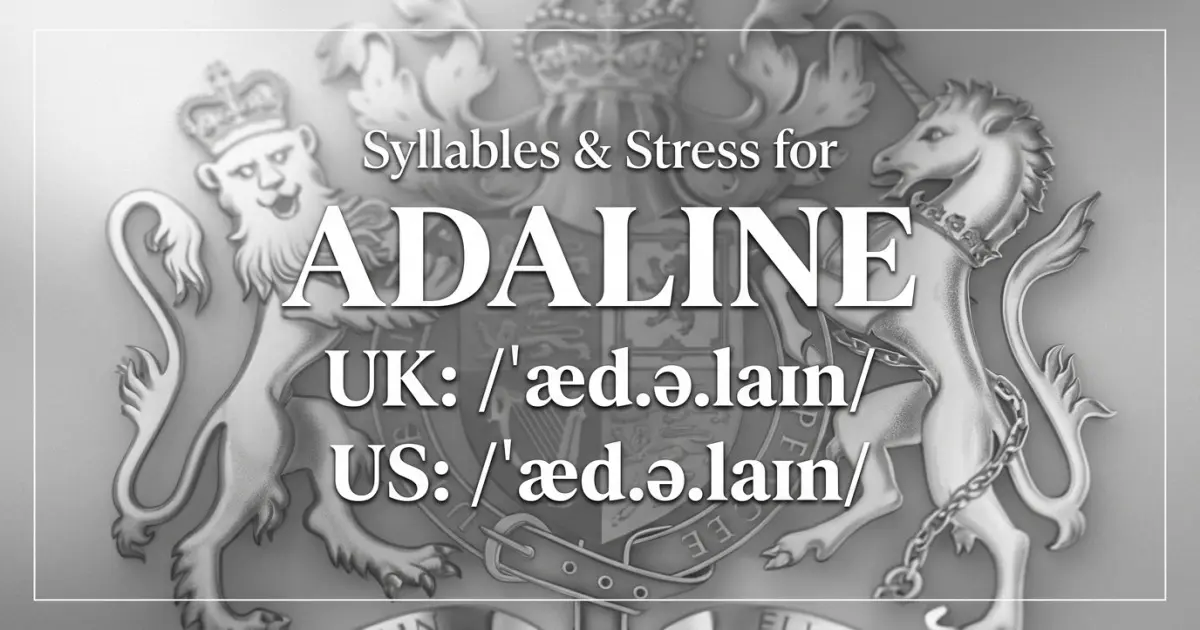
| IPA (US) | /ˈædəlaɪn/ | The IPA supplied points many readers toward a final sound closer to “line,” so the last syllable is the key place to stay consistent. |
| IPA (UK) | /ˈædəlaɪn/ | The U.K. form supplied matches the U.S. one, which means the main issue is not accent but which ending the family prefers. |
| Syllable count | 3 syllables | The name should move in three beats, not be rushed into two or stretched into four. |
| Stress pattern | Primary stress on the first syllable | The first beat carries the name. Do not place the weight at the end. |
| Opening vowel | /æ/ as in “add” | The name begins with “Ad,” not with “Aid” and not with a broad “Ah.” |
| Middle vowel | Reduced schwa /ə/ | The middle syllable should stay light and unstressed, more “uh” than a fully pronounced “ah.” |
| Ending | Light final syllable, where variation happens | If you choose “lyn,” teach it clearly. If you prefer a “line” reading, use it consistently from the start. |
Adaline in the mouth: why the first two syllables are the easy part
Whatever form a family prefers, the beginning of Adaline is quite stable. The name opens with a stressed Ad-, using the same /æ/ vowel heard in words like add, glad, or lad. That matters because it prevents the name from drifting into a more decorative opening like Aid-. Adaline begins solidly. The first beat should sound grounded, not airy. The sound matters more once you know what the name is meant to carry, which is why the wider frame starts in Adaline meaning.
The first syllable gives Adaline its structure
The initial syllable is what keeps Adaline from sounding overly fragile. Without that clear opening, the whole name could become too misty. The stress belongs there. It anchors the name and tells the ear where to begin. This is one reason Adaline feels elegant rather than merely sweet. The first syllable does real work.
The middle syllable keeps the name flowing
After the opening comes a relaxed middle syllable, the schwa /ə/. This is the soft “uh” sound found in countless English words. It is not meant to be pronounced with heavy emphasis. The middle of Adaline should move quickly and lightly, allowing the name to glide from the strong start toward its more delicate ending.
That middle softness is part of the name’s charm. It prevents Adaline from sounding stiff. The first syllable establishes control; the middle syllable gives the line some breath.
The ending is where the real pronunciation question begins
The final syllable is the point of tension in Adaline. The everyday guide here presents AD-uh-lyn, while the supplied IPA /ˈædəlaɪn/ points many readers toward a final sound more like line. Historically, reference books have also treated Adaline beside Adeline and other related noble names, which is one reason readers sometimes expect more than one possible ending.
That does not make the name unusable. It simply means the last syllable deserves special care. In real life, this is the part families need to say clearly when introducing the child for the first few times. Once people hear the intended version, they usually follow it without trouble.
Where Adaline most often gets misread
Because the name looks familiar but not fully standardized in the modern eye, most pronunciation mistakes involve the ending or a slight distortion of the opening.
Common mistake pattern one: turning Adaline into “Aid-uh-line”
One predictable error is shifting the first syllable from Ad to Aid. That changes the feel of the name immediately and makes it sound more elaborate than it needs to. The cleanest starting point remains the short /æ/ vowel, as in add.
Common mistake pattern two: putting too much weight on the final syllable
Another mistake is overemphasizing the end, as though the last syllable is where the drama of the name belongs. Adaline does not want that. The first syllable should lead. The name’s grace comes from the way it opens strongly and then softens, not from any theatrical final lift.
Common mistake pattern three: flattening the middle
Some speakers, trying to move quickly, flatten the middle syllable so much that the whole name becomes compressed and choppy. That is a smaller issue, but still worth noticing. Even when the middle is light, it still needs to be present. Adaline should feel like three connected beats, not a hurried blur.
Why Adaline stays fairly stable across accents, even when endings vary
The nice thing about Adaline is that its structure survives accent differences well. The opening Ad- and the soft middle syllable tend to remain recognizable across major English-speaking regions. The main variation is not really American versus British so much as how the final syllable is interpreted in use.
Accent usually changes color more than identity
One speaker may broaden the first vowel slightly. Another may clip the middle more quickly. But these differences usually do not confuse the name. Adaline remains clearly itself. The real practical issue is consistency at the family level, not geography.
Why clear family use matters more than abstract certainty
In names like Adaline, the strongest pronunciation rule is often the household rule. If parents consistently say AD-uh-lyn, that becomes the child’s lived pronunciation. If they choose a more line-ending form, that will settle in the same way. What matters is that the chosen form be stable, taught early, and modeled often enough that others stop hesitating.
That is not a weakness in the name. It is simply part of how elegant vintage names work in a modern world. They may look familiar enough to invite assumptions, but once heard in real speech, they are usually easy to follow.
How to practice Adaline so it sounds natural instead of staged
The best way to practice Adaline is to separate the name once, then stop overthinking it. Start with the strong opening: Ad. Add the soft middle: uh. Then finish with your chosen final form: lyn if that is the household version you want to teach. Spoken together, the name should feel smooth rather than highly segmented.
Useful sound neighbors for Adaline
The opening can be anchored to words like add or Adam. The middle is the same relaxed “uh” heard in countless everyday names. The final syllable, if you are using the lyn form, can be anchored to the ending of names like Evelyn or Madelyn, keeping it light instead of heavy. Once the sound pattern is clear, some shortenings stop feeling optional and start feeling natural, and the clearest map is in Adaline nicknames.
Practice lines that make Adaline feel real
Try the name in ordinary speech rather than in isolation:
“Adaline is here.”
“Have you met Adaline?”
“Adaline, your table is ready.”
“This is Adaline’s book.”
These short phrases help the rhythm settle into natural conversation. A name should not sound like a lesson every time it is spoken. Adaline sounds best when it moves with ease: firm at the start, gentle in the middle, and clear at the end.