
How to Pronounce Abraham: How the Name Is Usually Said
The real pronunciation test for Abraham usually happens in a room where no one has time for theory: a substitute teacher meeting the class list for the first time, a doctor stepping into a waiting room, a coach reading names off a registration form. Abraham is familiar enough that most people recognize it at once, yet it still carries enough history that speakers often slow down for half a beat before saying it. That pause is not really about difficulty. It is about respect. Abraham is one of those names that feels as though it should be spoken correctly because it arrives with weight already attached to it.
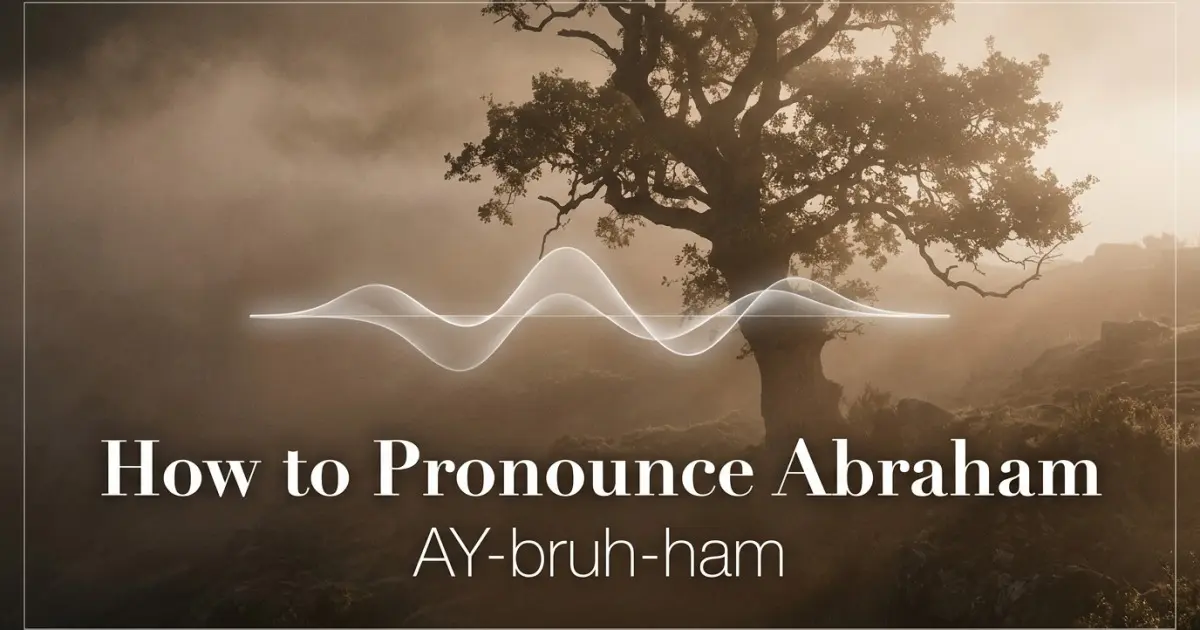
The reassuring part is that Abraham is much easier in ordinary English than its age and grandeur might suggest. In current everyday use, the name is said AY-bruh-ham. The first syllable carries the main stress, the middle syllable relaxes, and the final syllable lands clearly without turning heavy. Official data shows Abraham remains actively used in the United States, and that continued use helps keep the name’s spoken form familiar. Once heard aloud, it tends to settle quickly in the ear: broad at the front, light in the middle, grounded at the end.
How Abraham is actually said in everyday English
| Element | Phonetic Detail | Quick Tip |
|---|---|---|
| Everyday pronunciation | AY-bruh-ham | Give the first syllable the main weight, then let the middle syllable soften naturally. |
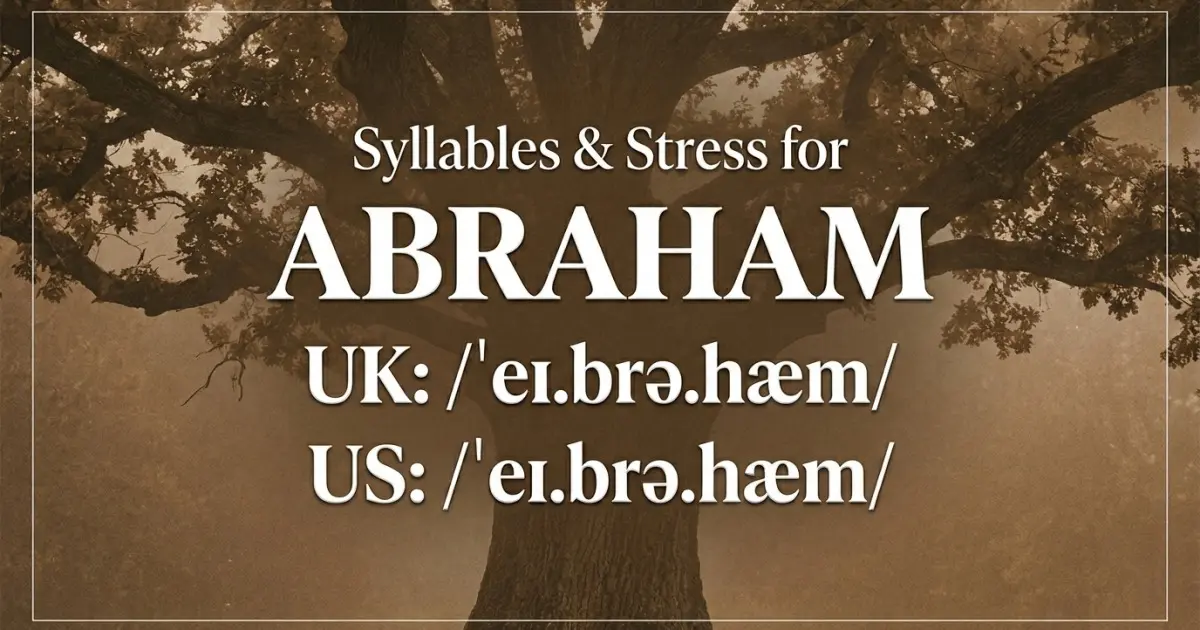
| IPA (U.S.) | /ˈeɪbrəˌhæm/ | The first stress is strong, and the last syllable is clear enough to keep the name from sounding swallowed. |
| IPA (U.K.) | /ˈeɪbrəˌhæm/ | In standard English pronunciation, the U.S. and U.K. forms are essentially aligned. |
| Syllable count | 3 syllables | Keep all three beats present, even though the middle one is lighter. |
| Stress pattern | Primary stress on the first syllable | The natural rhythm is AY-bruh-ham, not ay-BRAH-ham or ay-bruh-HAM. |
| Opening vowel | /eɪ/ | Start with the same sound you hear in day or the letter name A. |
| Middle syllable | /brə/ | The middle is reduced and relaxed, closer to “bruh” than a fully emphasized “brah.” |
| Final syllable | /hæm/ | End clearly on “ham,” but do not over-hit it as if it were the most important part of the name. |
Abraham works because the rhythm carries the dignity for you
Abraham is a good reminder that pronunciation is not just about getting the sounds right. It is also about getting the proportions right. This name has three syllables, but they are not equal. The first one carries the identity. The second is reduced. The third gives the name its human, grounded finish. If all three syllables are pronounced with the same force, Abraham starts sounding too formal, almost as if it has been lifted out of ordinary conversation. In real speech, the name sounds best when the rhythm is shaped rather than flattened. Pronunciation lands more fully when the name’s roots and history are already in view, so begin with Abraham meaning.
Why the first syllable gives Abraham its public confidence
The opening AY matters a great deal. It uses the diphthong /eɪ/, the same vowel glide heard in words like day and name. That gives Abraham brightness at the front. The name does not begin in a dark or heavy register. It begins openly, which helps keep a historically weighty name from sounding gloomy or forbidding. In practical terms, the opening syllable is what makes Abraham announce itself clearly in a room.
Why the middle of Abraham should not be over-enunciated
The middle syllable is where many speakers become overly careful. They see the spelling and want to give it more shape than it usually needs. In current English pronunciation, the middle is reduced to something close to bruh. Linguistically, this is the familiar schwa effect, where an unstressed vowel relaxes into a softer, more neutral sound. That reduction is not laziness. It is what makes Abraham sound natural in living speech.
This point is especially useful because some more formal or heritage-leaning pronunciations can sound slightly more open in the middle, closer to “brah.” But the controlling everyday English form remains AY-bruh-ham. The key is that the middle should never seize the spotlight. It is a bridge, not a headline.
Abraham in American and British speech is remarkably stable
One practical advantage of Abraham is that its standard U.S. and U.K. IPA forms are the same: /ˈeɪbrəˌhæm/. That is not true of every traditional name. Some shift noticeably across accents. Abraham, by contrast, tends to keep its shape. This makes it a very portable choice for families who live in international settings or simply want a name that behaves predictably in English-speaking environments.
What stays the same across accents
The main stress remains on the first syllable. The middle syllable stays reduced. The ending remains clearly articulated as ham. These are the anchors. A speaker from London and a speaker from Chicago may color the vowels slightly differently in ordinary conversation, but the overall design of the name remains steady.
What may shift a little in natural speech
The most likely variation is not structural but tonal. Some speakers may make the middle syllable slightly more open, others slightly more reduced. Some may let the final ham sound a touch heavier. These are normal accent differences rather than competing pronunciations. The name’s recognizable identity stays intact.
Where Abraham usually goes wrong, and how to fix it quickly
Because Abraham is so familiar, mispronunciations are usually small, not dramatic. Most mistakes come from either trying too hard or stressing the wrong part of the name.
The “ay-BRAH-ham” mistake
This is one of the most common overformal versions. It gives too much emphasis to the middle syllable and makes the name sound more ceremonial than conversational. While listeners will still understand the name, the rhythm no longer matches the most natural modern English pattern. The fix is simple: move the energy back to the first syllable and let the middle soften.
The swallowed-middle mistake
On the other side, some speakers compress Abraham too quickly and nearly erase the middle syllable, making it sound like “A-bram” or blurring it toward Abram. That changes the identity of the name. Abraham needs all three syllables to stay audible, even if the middle one is light. Think of it not as a long name, but as a three-step movement with one quick middle step.
The heavy-ending mistake
Another small error is punching the final ham too hard, as if the last syllable were where the main meaning lies. In English speech, it should sound grounded, not overdeclared. Abraham ends clearly, but not dramatically.
Abraham becomes easiest once you hear its sound neighbors
A helpful way to learn a name is to place it beside nearby sounds you already know. Abraham begins with the same long A heard in names like Aiden or words like able. Its middle has the reduced comfort of everyday English unstressed syllables. Its ending is literal and familiar: ham. Because the strongest energy lands early, the shorter forms often grow from the opening of the name, and that pattern is easier to see in nicknames for Abraham.
Useful comparisons that make Abraham click
The most useful comparison is often Abram, precisely because the two names are close but not identical. Abram is shorter and tighter. Abraham is broader and more layered. Another good contrast is Graham. Both names end in a similar grounded way, but Abraham opens wider and carries more syllabic space through the middle.
Practice lines that make Abraham feel natural
These short lines help the rhythm settle quickly:
“Abraham is here.”
“I spoke with Abraham today.”
“This is Abraham.”
“Abraham rhymes with the shape of AY-bruh-ham.”
“Abe is short for Abraham.”
Said aloud at normal speed, these lines usually fix the pattern immediately. The first syllable should lead, the middle should soften, and the ending should land clearly without becoming too heavy.